Commercial HVAC in Derby
Serving Derby and the wider Derbyshire area, including Belper, Ilkeston, Ashbourne.
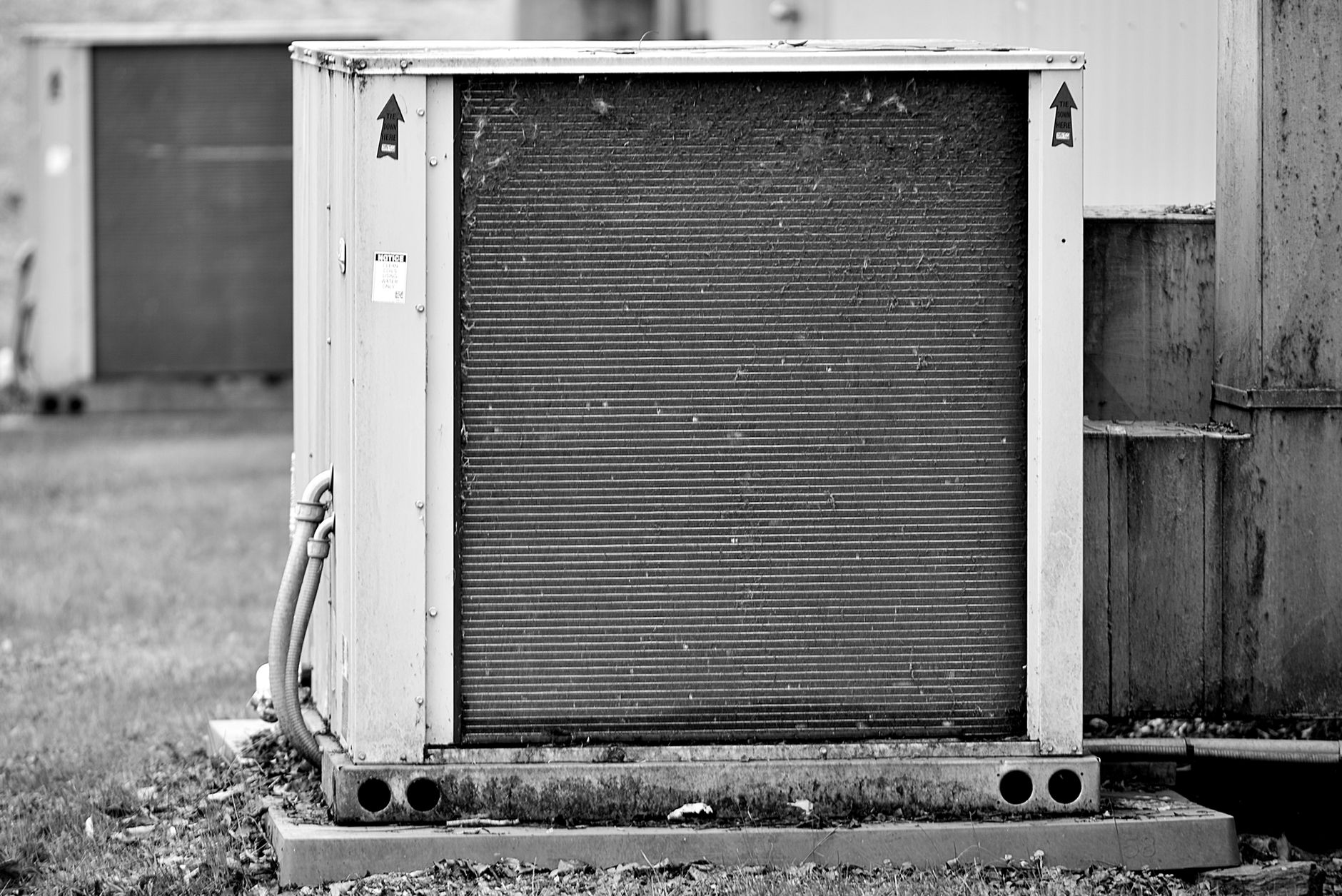
Derby’s commercial buildings do not draw power like a typical office town. The city is one of the UK’s advanced-manufacturing centres, anchored by the Rolls-Royce aerospace campus at Sinfin and an engineering supply chain spread across Raynesway, Spondon and Infinity Park. That mix produces two distinct HVAC problems in the same postcode: process-driven cooling and close-control ventilation in the manufacturing estate, and MEES-pressured comfort systems in the Pride Park office core. A good contractor designs, installs and maintains commercial HVAC across both, and the starting point is always the building’s real load — not a like-for-like box swap.
Commercial HVAC installation and system design in Derby
Getting the plant right on a Derby manufacturing site starts with the load shape, because it rarely looks like a standard office. A machine hall, a test cell or a clean room carries internal heat gains from process equipment and often needs temperature and humidity held inside a tight band around the clock, which pushes the design toward chilled water and close-control rather than modulating comfort VRF.
VRF, chillers and air handling matched to the load
For Pride Park and city-centre offices, heat-recovery (three-pipe) VRF air conditioning usually suits the mixed load — it moves heat from a sunlit south face to a cold north face instead of rejecting it, which matters when a floor plate needs cooling and heating in the same hour. Above roughly 150 to 200 kW of cooling, or where a Raynesway process load runs a flat profile, a chilled-water system with free-cooling and good part-load turndown is the more efficient route. Central air handling units with EC fans, heat recovery and F7 or ePM filtration handle the fresh-air side, and on ageing plant an EC-fan and heat-recovery retrofit often beats a full replacement on whole-life cost. A good contractor sizes from a survey and, where available, half-hourly meter data, then specifies low-GWP refrigerant — R32 or R454B — so the plant is not stranded by the F-gas phase-down.
What commercial HVAC costs for a Derby manufacturing site
Cost is driven by load, zoning, plant-room access, refrigerant and any electrical upgrade, so ranges are wide — but honest figures help a plant manager budget. For numbers, the cost ladder sets out sourced prices by system type, and anything larger than a split or a VRF scheme is priced from a design. On an advanced-manufacturing site the recurring cost that often surprises owners is refrigerant: as R410A supply tightens, re-gas bills on ageing plant rise year on year, which is why a good contractor prices the transition to R32 or R454B into a whole-life comparison rather than treating it as a future problem. A good contractor models it from a survey and your half-hourly data, and shares the assumptions behind any quote.
F-Gas maintenance and planned preventative maintenance
Most commercial VRF and chiller systems across Derby’s DE21, DE23 and DE24 industrial districts hold enough refrigerant to fall under statutory F-gas leak-check duties. As a rule of thumb, around 2.4 kg of R410A crosses the 5-tonne CO2-equivalent threshold that triggers at least annual leak checks; 50 tonnes moves that to six-monthly, and 500 tonnes to quarterly. Those checks must be carried out by an F-Gas registered company, with records kept, and the Environment Agency enforces the duty.
A planned preventative maintenance (PPM) contract folds those statutory checks into scheduled visits that also catch faults before they become breakdowns and protect manufacturer warranties, many of which require documented maintenance. On a multi-machine manufacturing site, the cost of a reactive call-out that halts production dwarfs the cost of the visit that would have prevented it — which is why HVAC maintenance and PPM is usually the first thing a Derby estates manager tightens up. A good contractor builds the schedule around SFG20 task frequencies and the specific plant on site, not a generic template.
Heat-pump electrification and MEES compliance
Derby City Council has set a 2035 net-zero target, and for owners and landlords the MEES standard is the nearer pressure: it is already unlawful to continue letting commercial space below EPC E, and the proposed EPC B standard by 2031 for buildings over 1,000 sqm would push far more of Pride Park’s stock into upgrade territory. HVAC dominates a building’s modelled energy use, so efficient VRF, chillers, heat recovery and controls are where the EPC points are won.
Electrifying heat with a commercial heat pump removes on-site gas combustion, but whether it cuts running cost depends on the SCOP and your tariff. Electricity runs around four times the unit price of gas on 2026 caps, so a heat pump only pays where its seasonal efficiency closes that gap — at a SCOP near 3.5 a unit of heat lands roughly level to modestly cheaper than a good gas boiler, while at lower field SCOPs it can cost marginally more. A good contractor models it from your data rather than quoting a headline saving. Where the maths works, commercial heat pumps pair naturally with the advanced-manufacturing decarbonisation focus that Rolls-Royce’s presence has driven across the city.
Why Derby businesses work with us
A good contractor is HVAC specialists, not box-swappers. That means a good contractor starts with the load, it tells you honestly when a refurbishment beats a replacement, and it quotes from a survey rather than a phone-call estimate. The contractor's engineers must be F-Gas registered and keep the leak-check records that satisfy the Environment Agency, and every new install should use low-GWP refrigerant so your plant is not stranded by the next phase-down step.
A good contractor also sequences capital the way an estates manager actually plans it: make cooling and ventilation efficient first, electrify heat where the SCOP maths stacks up, then look at solar to offset the electrified draw. No urgency selling, no invented savings — the numbers come from your building.
Areas around Derby
A good contractor covers Derby city centre and the full DE postcode area, including the DE21, DE22, DE23 and DE24 commercial districts, out to Belper, Ilkeston, Ashbourne, Burton upon Trent and Long Eaton. On the industrial side that includes Pride Park, Sinfin Lane, Raynesway, Wyvern Way and the Spondon estates, plus Infinity Park Derby. The wider East Midlands is covered too — see our pages for Nottingham, Leicester and Stoke-on-Trent, and further out to Coventry and Birmingham.
Common questions about commercial HVAC in Derby
Do you work on process cooling and clean rooms, not just office comfort HVAC?
Yes. Derby’s advanced-manufacturing base means much of our work is process-driven — close-control cooling, chilled water and precision ventilation for test cells, machine halls and clean rooms where temperature and humidity have to stay inside a tight band. A good contractor designs these from the process load, which behaves very differently from a modulating office system.
My VRF runs on R410A — do I have to replace it now?
Not immediately. Existing larger R410A systems are not banned outright, but they are squeezed by the F-gas phase-down and re-gas costs are rising as supply tightens. Keep the system leak-tight and maintained, plan the replacement for end of life, and specify R32 or R454B when you do so the new plant is not stranded by the next phase-down step.
How often do I legally need F-gas leak checks in Derby?
It depends on the refrigerant charge. At 5 tonnes CO2-equivalent and above you need at least annual checks, six-monthly at 50 tonnes and quarterly at 500 tonnes. Most commercial VRF and chillers on Derby’s industrial estates are in scope. The checks must be done by an F-Gas registered company and the records kept, with the Environment Agency enforcing the duty.
Is there a grant for commercial HVAC or heat pumps in Derby?
The £7,500 Boiler Upgrade Scheme covers only heat pumps up to 45 kWth in England and Wales, not VRF, chillers or air handling units. Commercial HVAC is funded through the Annual Investment Allowance (100% on up to £1m a year) and, for companies, the 50% first-year allowance for special-rate assets — heating, ventilation and air-cooling plant is usually special-rate, so full expensing does not normally apply, plus Climate Change Agreement relief on the levy for eligible energy-intensive sectors. Confirm current rates on gov.uk. Some qualifying industrial sites could historically use the Industrial Energy Transformation Fund, which closed in July 2025.
How does an upgrade help our EPC and MEES position?
HVAC dominates a commercial building’s modelled energy use, so efficient VRF or chillers, heat recovery, better controls and electrified heat directly lift the EPC rating. With EPC E already required to let and EPC B proposed by 2031 for buildings over 1,000 sqm, an HVAC upgrade is often the most cost-effective route to protecting lettability across Derby’s Pride Park and city-centre stock.
Get a quote for commercial HVAC in Derby
Whether it is a process-cooling design at Raynesway, an AHU refurbishment on a Spondon unit, or a staged VRF transition on Pride Park, a good contractor quotes from a survey and your real load data. Ask for a desk feasibility or explore our commercial HVAC services across the East Midlands. A good contractor will tell you honestly whether a refurbishment beats a replacement — and it will never quote you a saving it cannot model.
Postcodes covered in Derby
- DE1
- DE3
- DE21
- DE22
- DE23
- DE24
- DE65
- DE72
- DE73
- DE74
Other areas covered
Get a quote in Derby
SEO Dons Ltd publishes this site and replies to every enquiry by email. It does not install, service or maintain HVAC.