Commercial HVAC in Northampton
Serving Northampton and the wider Northamptonshire area, including Wellingborough, Kettering, Daventry.
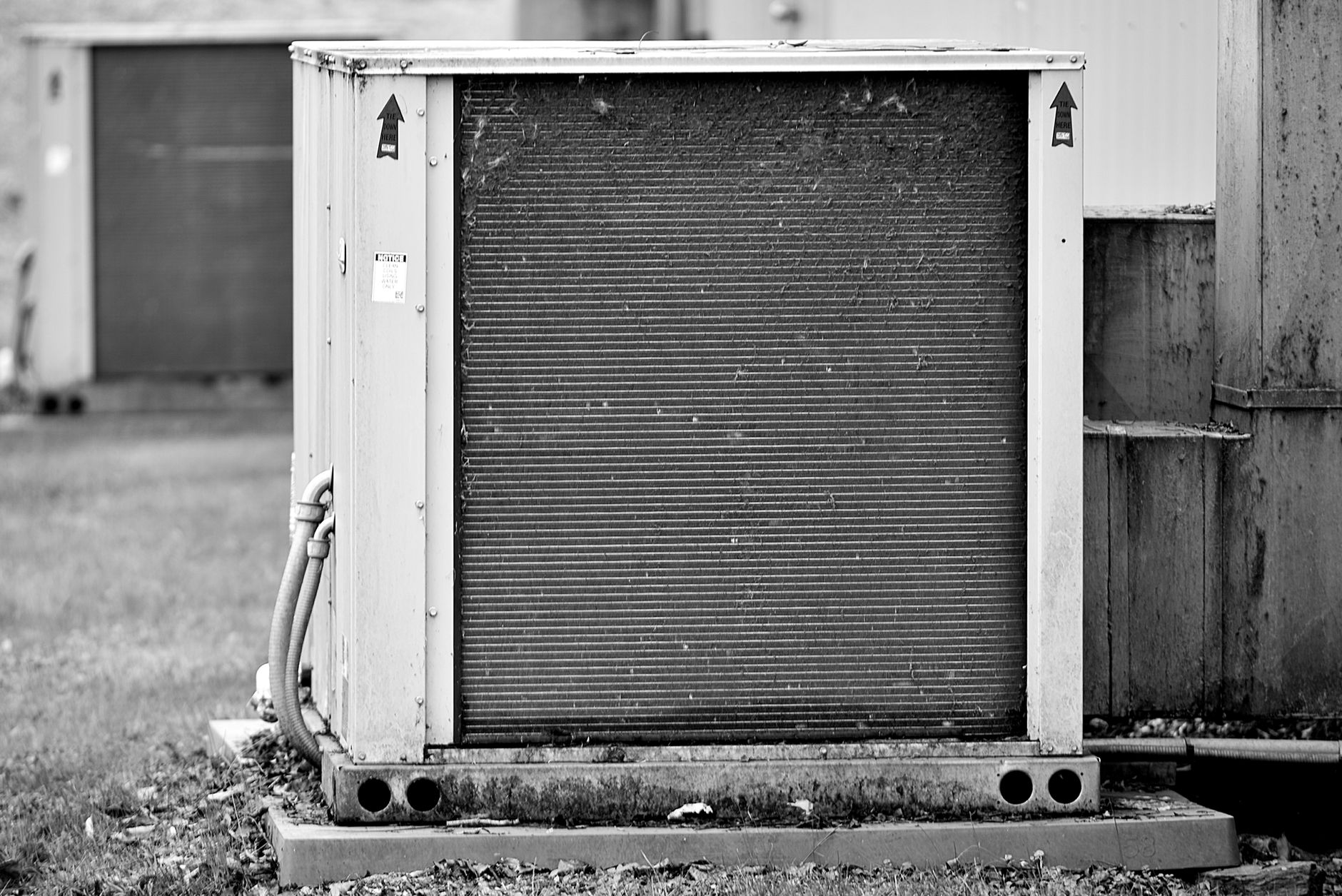
Northampton is logistics country. Sitting on the M1 corridor, it is one of the UK’s densest distribution hubs, with Brackmills, Pineham Park and Lodge Farm packed with large-floorplate sheds. That single fact shapes the local commercial HVAC brief: the dominant problem here is not comfort cooling but the ventilation, heat-management and fan energy of large-volume buildings. Get those right and you cut the biggest controllable line on a warehouse bill. A good contractor designs, installs and maintains commercial HVAC across the NN postcode area, starting from how each building actually draws.
Commercial HVAC installation and system design in Northampton
In a distribution shed the load is driven by the volume of air to condition, the fresh-air rate for the people working in it, and the tendency for warm air to stratify up under the roof where it does no good. The design answer is rarely a big cooling system; it is efficient ventilation, heat recovery and destratification.
Ventilation, air handling and warm-air heating
Across Brackmills and Pineham Park, air handling units with EC fans, heat recovery and appropriate filtration handle the fresh-air demand, and destratification fans pull warm air back down from roof level to the working floor so heating energy is not wasted. Ageing constant-volume rooftop AHUs are very often better refurbished than replaced — an EC-fan retrofit with new coils and a heat-recovery section can cut fan energy sharply for a fraction of a replacement’s cost. A good contractor runs that as a whole-life-cost comparison, not a default rip-out. For the town-centre and Moulton Park office stock, VRF air conditioning on low-GWP R32 or R454B handles the comfort load, with heat recovery moving heat between zones. Where a building brings in large volumes of fresh air, commercial ventilation and MVHR recovers up to around 90% of the exhaust heat — the direct link between indoor air quality and the energy bill.
What commercial HVAC costs on a Northampton distribution site
Cost is driven by the volume to condition, the fresh-air rate, plant access and any electrical upgrade. Published budget figures sit on the HVAC cost ladder: about £400–£700 per kW installed for VRF in one 2026 trade guide, with chillers and air handling units priced from a design. For a 3PL the biggest budget lever is part-load consumption — EC fans, heat recovery and destratification cut the fan and heating energy that dominates a warehouse bill across the many hours it runs below peak. A good contractor models the numbers from a survey and your half-hourly data before quoting.
F-Gas maintenance and planned preventative maintenance
The VRF and chiller plant across Northampton’s NN commercial districts generally holds enough refrigerant to fall under statutory F-gas leak-check duties. Roughly 2.4 kg of R410A passes the 5-tonne CO2-equivalent threshold that triggers at least annual checks; 50 tonnes moves it to six-monthly and 500 tonnes to quarterly. An F-Gas registered company must carry out the work and keep the records, and the Environment Agency enforces the duty.
For a 3PL or distribution operator, uptime is everything, so a planned preventative maintenance contract earns its keep by catching faults before they become breakdowns and by handling those statutory checks without a scramble. It also protects warranties, many of which require documented maintenance. Our HVAC maintenance and PPM schedules follow SFG20 task frequencies and are built around the specific plant on your site rather than a generic checklist.
Heat-pump electrification and MEES compliance
West Northamptonshire Council carries a 2030 net-zero target — one of the earlier deadlines across our coverage — which sharpens board-level pressure to electrify heat. For owners and landlords, MEES is the immediate legal driver: it is already unlawful to continue letting commercial space below EPC E, and the proposed EPC B standard by 2031 for buildings over 1,000 sqm would bring far more of the local stock into scope. Since HVAC dominates modelled energy use, efficient plant, heat recovery and controls are the most direct route to the rating.
Whether a commercial heat pump cuts running cost depends on SCOP and tariff. Electricity is around four times the unit price of gas on 2026 caps, so electrification pays where the seasonal efficiency closes that gap — roughly level to modestly cheaper at a SCOP near 3.5, potentially marginally more at lower field SCOPs. A good contractor models it from your real data. In a large distribution shed, commercial heat pumps feeding warm-air or radiant heating, paired with destratification, can be an efficient route to removing on-site gas.
Why Northampton businesses work with us
A good contractor knows distribution buildings. The efficiency prize in a Brackmills shed sits in the fans, the heat recovery and the destratification — not in oversized cooling — and a good contractor designs accordingly. A refurbishment can beat a replacement, a quote should come from a survey rather than a phone estimate, and the contractor's engineers must be F-Gas registered with the leak-check records the Environment Agency requires.
A good contractor also sequences capital the way an FM plans it: efficiency first, electrification where the SCOP maths stacks up, then solar to offset the electrified load — a natural fit for a large shed roof. No urgency selling, no invented savings.
Coverage matters on an M1-corridor estate, because a distribution operator with sites at Brackmills, Pineham Park and Daventry wants one contractor holding the PPM records across all of them rather than a different firm at each gate. A good contractor runs multi-site schedules from a single point of contact, keeps the F-gas leak-check logs consolidated for audit, and prioritises callouts by the operational impact of the building affected — a chilled pick-face before a mezzanine office. That consistency is worth more to a logistics business than a marginally cheaper one-off visit.
Areas around Northampton
A good contractor covers Northampton and the full NN postcode area, including the NN3, NN4 and NN5 commercial districts, out to Wellingborough, Kettering, Daventry, Brackley and Towcester. On the industrial side that means Brackmills Industrial Estate, Lodge Farm, Pineham Park, Moulton Park and Royal Oak. The wider region is covered too — see our pages for Milton Keynes, Leicester and Coventry, plus Derby and Birmingham.
Common questions about commercial HVAC in Northampton
What HVAC does a distribution shed on Brackmills actually need?
Usually efficient ventilation, heat recovery and destratification rather than large cooling plant. The fan and heating energy dominates a warehouse bill, so EC-fan retrofits, heat-recovery sections and destratification fans that return warm air from the roof deliver the biggest efficiency prize. A good contractor designs from the building’s volume, air-change rate and how it is occupied.
Should I refurbish or replace my rooftop AHUs?
Often refurbish. An EC-fan retrofit with new coils and a heat-recovery section cuts fan energy for a fraction of a full replacement’s cost and disruption — which matters on a live logistics site. Replacement makes sense where the casing is corroded or the duty has changed. It is a survey-led, whole-life-cost decision, not a default.
How often do I need F-gas leak checks?
It depends on the refrigerant charge: at least annual at 5 tonnes CO2-equivalent, six-monthly at 50 tonnes, quarterly at 500 tonnes. Most commercial VRF and chillers are in scope. An F-Gas registered company must do the checks and keep the records, with the Environment Agency enforcing the duty.
Does Northampton’s 2030 net-zero target affect our building?
West Northamptonshire Council’s 2030 target is a policy pressure rather than a direct legal duty on your building, but it sharpens board and landlord expectations to electrify heat and cut emissions. The nearer legal driver is MEES — EPC E to let now, EPC B proposed by 2031 for buildings over 1,000 sqm — where efficient HVAC directly lifts the rating.
Is there a grant for commercial HVAC or heat pumps?
The £7,500 Boiler Upgrade Scheme covers only heat pumps up to 45 kWth in England and Wales, not VRF, chillers or air handling units. Commercial HVAC is funded through the Annual Investment Allowance (100% on up to £1m a year) and, for companies, the 50% first-year allowance for special-rate assets — heating, ventilation and air-cooling plant is usually special-rate, so full expensing does not normally apply, with Climate Change Agreement relief on the levy for eligible energy-intensive sectors. Confirm current rates on gov.uk.
Get a quote for commercial HVAC in Northampton
From a ventilation upgrade at Brackmills or Pineham Park to a VRF install in a Moulton Park office, a good contractor quotes from a survey and your real load data. Ask for a desk feasibility or explore our commercial HVAC services across the East Midlands. A good contractor will tell you honestly whether a refurbishment beats a replacement — and never quote a saving it cannot model.
Postcodes covered in Northampton
- NN1
- NN2
- NN3
- NN4
- NN5
- NN6
- NN7
Other areas covered
Get a quote in Northampton
SEO Dons Ltd publishes this site and replies to every enquiry by email. It does not install, service or maintain HVAC.