Commercial HVAC in Hull
Serving Hull and the wider East Yorkshire area, including Beverley, Cottingham, Hessle.
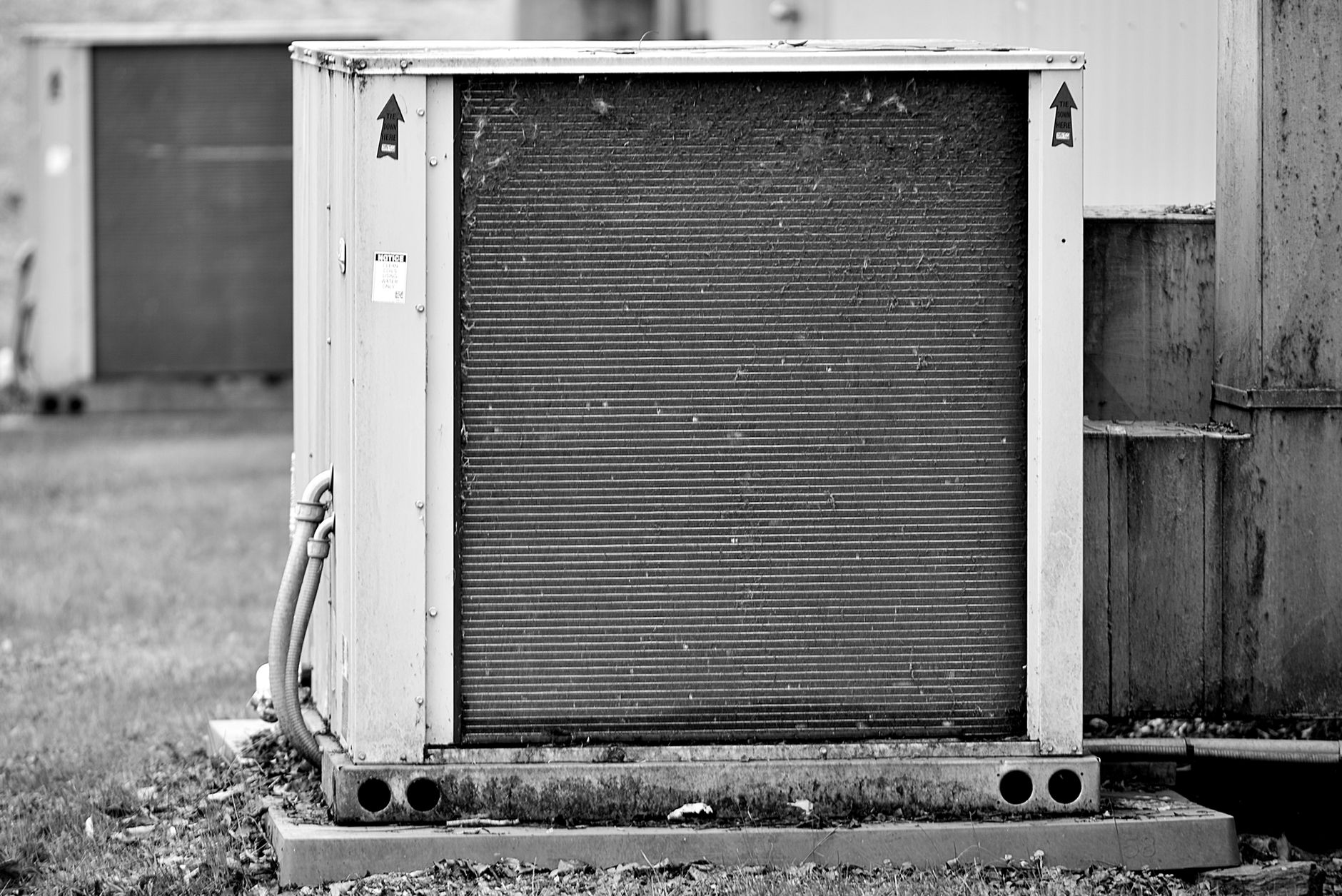
Hull’s commercial energy profile is shaped by heavy industry and the estuary. The Saltend Chemicals Park anchors a major process cluster where cooling, ventilation and heat management run to industrial rather than comfort duties, while Priory Park, Bridgehead Business Park and Stoneferry carry logistics and light-industrial stock along the Humber. The Humber Freeport brings Enhanced Capital Allowances into play, and the estuarine, coastal setting adds a corrosion factor for exposed plant. A good contractor designs, installs and maintains commercial HVAC across the HU postcode — from process chilled water to office VRF — sized to how each building actually draws.
Commercial HVAC installation and system design in Hull
On an industrial or logistics building the load is driven by process and ventilation rates and often runs flat around the clock, so reliable process cooling and good part-load control matter far more than a headline comfort figure. Estuarine air also means corrosion-rated plant on exposed compounds, because the salt does not care how well the unit was sized if the coils fail early.
Process and industrial — chillers and process cooling
Around Saltend and the Stoneferry industrial fabric, buildings carry genuine process loads — chilled water for machinery and production, compressed-air and reaction cooling, and tight ventilation control. Above roughly 150 to 200 kW a chilled-water system with free-cooling and part-load turndown is the efficient answer, with L8 Legionella hygiene on any wet plant and DSEAR siting rules where flammable-refrigerant plant is used near a process environment.
Logistics and cold storage — AHUs and ventilation
At Priory Park and Bridgehead, warm air strands at the roofline in the sheds while cold stores carry a flat cooling duty. Air handling units with EC fans, destratification and heat recovery cut the fan and heating energy, and an ageing AHU can often be refurbished rather than replaced.
City-centre and marina offices — VRF
The HU1 and Marina office stock runs the usual multi-let VRF, much of it on ageing R410A. New systems should run low-GWP R32 rather than R410A to avoid F-gas stranding, with heat-recovery VRF where a building cools one elevation while heating another.
F-Gas maintenance and planned preventative maintenance
Process chillers, cold stores and office VRF alike usually hold enough refrigerant to fall inside the leak-check regime — at least annual at 5 tonnes CO2-equivalent, six-monthly at 50 tonnes, quarterly at 500 — carried out by an F-Gas registered company certified through REFCOM, Quidos or Bureau Veritas, records kept, Environment Agency enforcing. Estuarine plant also needs closer maintenance because salt accelerates corrosion.
On an industrial site, a cooling failure can stop a process, so a PPM contract on SFG20 schedules is uptime insurance as much as compliance. It folds the statutory leak checks into planned visits, adds remote monitoring on critical process cooling, protects warranties, and turns emergency call-outs into scheduled work — the economics that matter most where downtime is the real cost.
Heat-pump electrification and MEES compliance
Hull City Council targets net zero by 2030 under its Carbon Neutral 2030 Plan, and the Humber Freeport unlocks Enhanced Capital Allowances on qualifying plant and buildings within the zone. Commercial heat pumps remove on-site gas at SCOP 2.8 to 4.0 and, on an industrial site with a steady waste-heat stream, can sometimes recover process heat as a source. The economics turn on the roughly four-to-one electricity-to-gas ratio: at SCOP 3.5 heat is roughly level to around 12% cheaper than a good gas boiler, at median field SCOP marginally more — so a good contractor models each site.
On MEES, it is unlawful to continue letting below EPC E, with EPC B by 2031 proposed for larger rented non-domestic buildings (confirm current milestones on gov.uk); this bites hardest on Marina and city-centre offices. Energy-intensive industry may historically have used the Industrial Energy Transformation Fund, which closed in July 2025. Comfort HVAC is funded through the Annual Investment Allowance (100% on up to £1m a year) and, for companies, the 50% first-year allowance for special-rate assets — heating, ventilation and air-cooling plant is usually special-rate, so full expensing does not normally apply and, for qualifying Freeport sites, Enhanced Capital Allowances. The national allowances are explained on the HVAC tax relief and funding page.
Process cooling near the Humber cluster — reliability and waste heat
The Saltend and Stoneferry industrial fabric carries process cooling duties that a comfort contractor rarely meets, and two things dominate the design brief. The first is reliability: a chilled-water loop that feeds a reaction, a compressor set or a production line cannot be allowed to drift or drop out, so redundancy, part-load turndown and remote monitoring belong in the specification from the start, and a single-point-of-failure design is a false economy on a site where a stoppage costs far more than the plant. The second is waste heat. An industrial process that rejects a steady stream of low-grade heat is, in energy terms, a resource rather than a nuisance — a heat pump can lift that reject heat to a useful temperature for space heating or hot water, turning a cost into a saving and improving the effective SCOP well beyond what an air-source unit alone would manage. Whether that pays depends on how reliable and how warm the waste-heat stream is, which is exactly the sort of thing a good contractor assesses at feasibility rather than assume. On the Humber, where industrial decarbonisation is a live regional agenda, this joined-up view of cooling, waste heat and electrification is where the genuine gains sit.
What commercial HVAC costs in Hull
Cost is driven by the process duty, the corrosion specification for the estuary, ventilation rates and any electrical supply upgrade, so a survey precedes any figure. Published budget figures sit on the HVAC cost ladder: about £400–£700 per kW installed for VRF in one 2026 trade guide, with chillers and air handling units priced from a design. Corrosion-rated coastal plant carries a modest premium that pays back in avoided early failure, and qualifying Humber Freeport sites may offset capital through Enhanced Capital Allowances. A good contractor models the running cost from your real data and sets out the capital and the tax treatment before you commit.
Why choose us for commercial HVAC in Hull
A good contractor designs for Hull’s real building mix — industrial process cooling, coastal-rated logistics plant, and office refrigerant transitions — rather than a comfort template. The right contractor will be F-Gas registered, design to BS EN 378, DSEAR and CIBSE Guide B, factor estuarine corrosion into plant selection, and treat uptime as the priority on any process building.
Areas around Hull
A good contractor covers Hull and the HU postcode area, including Saltend, Priory Park, Bridgehead Business Park, Stoneferry Industrial Estate and Hull Marina, plus Beverley, Cottingham, Hessle, Withernsea and Hornsea. Neighbouring areas covered: Doncaster, Leeds, Sheffield and Bradford.
Hull commercial HVAC FAQs
Does the Humber Freeport help fund commercial HVAC?
Within the Freeport zone, qualifying plant and buildings can attract Enhanced Capital Allowances — a real capital lever. A good contractor helps identify whether your site and equipment qualify and confirms current terms on gov.uk.
How does the estuarine setting affect our plant?
Salt-laden air accelerates corrosion and coil fouling, so exposed plant should be specified with corrosion-rated casings and coil coatings and maintained more attentively. A good contractor builds it into both design and the maintenance schedule.
Can HVAC downtime stop production on an industrial site?
Yes — if process cooling or critical ventilation fails, a process can stop. That is why a good contractor builds remote monitoring and planned preventative maintenance into any industrial HVAC so faults are caught before they become stoppages.
Does Hull’s 2030 net-zero target place a duty on my building?
The target is the council’s own commitment. MEES is the binding standard on rented space — EPC E now, EPC B proposed by 2031 for larger buildings — and it bites most on office stock. Efficient HVAC lifts the rating.
Is there grant funding for industrial fuel-switching in Hull?
Energy-intensive industry has historically used the Industrial Energy Transformation Fund, but that route closed in July 2025 with no successor planned. Most commercial HVAC is funded through the Annual Investment Allowance and, for companies, the 50% first-year allowance for special-rate plant.
Talk to us about your Hull HVAC project
Whether it is a Saltend process-cooling chiller, a Priory Park warehouse AHU refresh or a Marina office VRF transition, a good plan is built around uptime and the estuary.
Postcodes covered in Hull
- HU1
- HU2
- HU3
- HU4
- HU5
- HU6
- HU7
- HU8
- HU9
- HU10
- HU11
- HU13
- HU16
- HU17
Other areas covered
Get a quote in Hull
SEO Dons Ltd publishes this site and replies to every enquiry by email. It does not install, service or maintain HVAC.