Commercial HVAC in Plymouth
Serving Plymouth and the wider Devon area, including Saltash, Plympton, Plymstock.
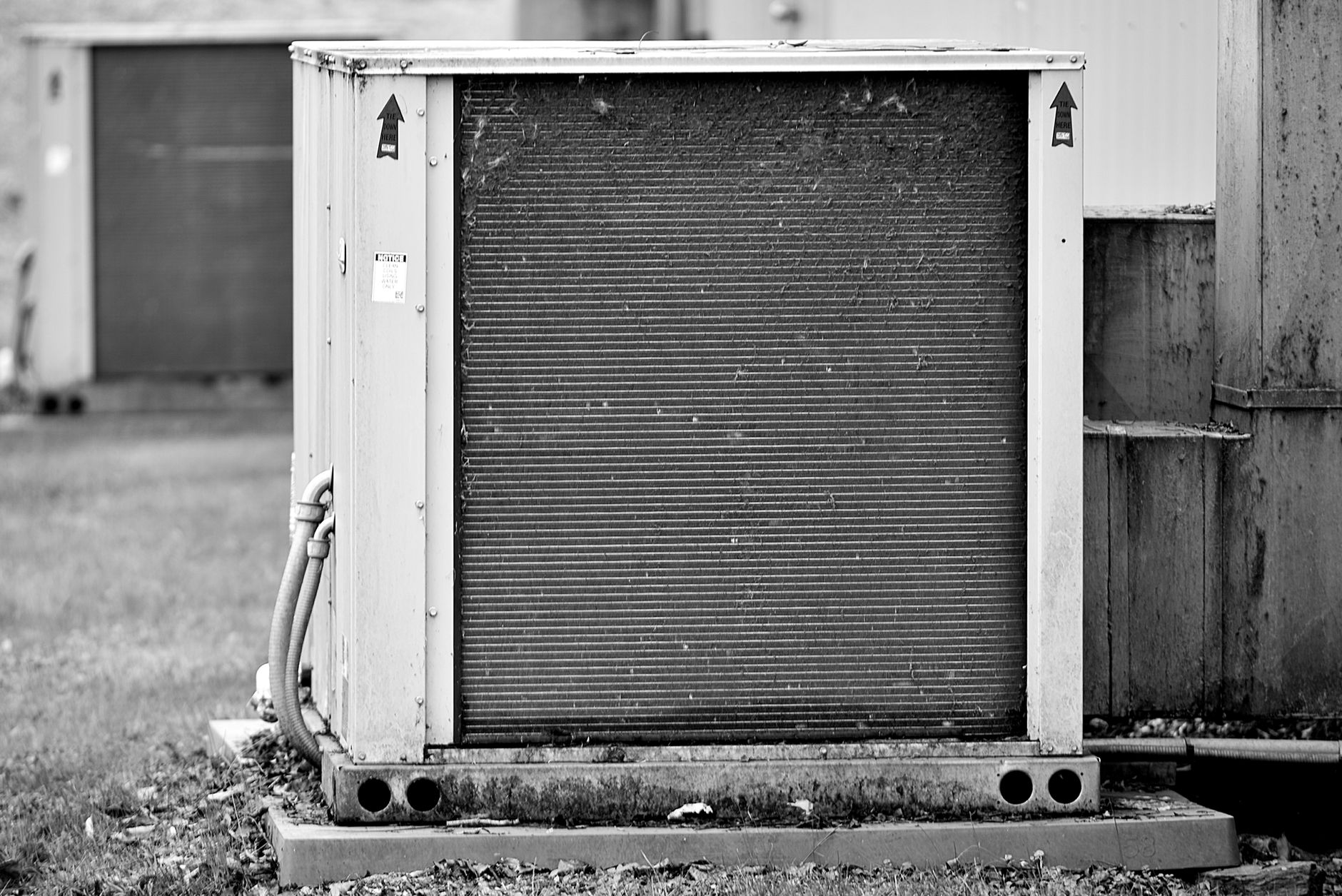
Plymouth is the far South West’s largest commercial centre, a coastal city with a marine and defence economy, manufacturing at Estover and Ernesettle, and a commercial-scale energy footprint around Langage Energy Park. The Plymouth and South Devon Freeport brings Enhanced Capital Allowances into play for qualifying sites, and the exposed maritime setting means plant has to be specified for salt corrosion. The HVAC mix runs from process and marine-adjacent cooling to office VRF and retail comfort systems. A good contractor designs, installs and maintains commercial HVAC across the PL postcode, sized to how each of these building types actually draws.
Commercial HVAC installation and system design in Plymouth
A commercial building spends most of its hours below peak, so part-load efficiency and controls decide the bill more than headline capacity. On the coast a good contractor also specifies plant and coil coatings for salt-laden air, because exposed maritime plant corrodes faster than inland equipment and a design that ignores that pays for it in premature failure.
Manufacturing and marine — chillers and process cooling
Around Estover, Ernesettle and the marine-adjacent sites, buildings carry genuine process loads — chilled water for machinery, marine fabrication and production, with tight temperature and ventilation control. Above roughly 150 to 200 kW a chilled-water system with free-cooling and part-load turndown is the efficient answer, with L8 Legionella hygiene on any wet plant and corrosion-rated construction for the maritime setting.
Offices and retail — VRF and heat recovery
The PL1 to PL4 city-centre offices and the Marsh Mills retail park run the usual VRF and VRV — 22 to 150 kW modulating to many indoor units, with heat-recovery VRF where a building cools one elevation while heating another. New systems should run low-GWP R32 rather than legacy R410A so they are not stranded by the F-gas phase-down.
Ventilation and indoor air quality
Every m³ of fresh air carries a heating or cooling penalty unless recovered. Mechanical ventilation with heat recovery recovers up to around 90% of exhaust heat, and demand-controlled ventilation supplies fresh air to CO2 and occupancy rather than running flat out — the link between healthy air and low energy.
F-Gas maintenance and planned preventative maintenance
Process chillers, office VRF and retail systems alike usually hold enough refrigerant to fall inside the leak-check regime — at least annual at 5 tonnes CO2-equivalent, six-monthly at 50 tonnes, quarterly at 500 — carried out by an F-Gas registered company certified through REFCOM, Quidos or Bureau Veritas, records kept, Environment Agency enforcing. Maritime plant also needs closer maintenance because salt accelerates corrosion and coil fouling.
A PPM contract on SFG20 schedules folds those statutory checks into planned visits, protects warranties, and — being at the far end of the region — reduces the cost and delay of reactive call-outs by keeping plant fault-free through scheduled work. It is almost always cheaper than the emergency visits it prevents.
Heat-pump electrification and MEES compliance
Plymouth City Council targets net zero by 2030 under its Net Zero Action Plan, and the Plymouth and South Devon Freeport unlocks Enhanced Capital Allowances on qualifying plant and buildings within the zone. Langage Energy Park also gives the city a commercial-scale renewable-generation context that supports electrification. Commercial heat pumps remove on-site gas at SCOP 2.8 to 4.0, best paired with low flow temperatures, upgraded emitters and ventilation heat recovery. The economics turn on the roughly four-to-one electricity-to-gas ratio: at SCOP 3.5 heat is roughly level to around 12% cheaper than a good gas boiler, at median field SCOP marginally more — so a good contractor models each site.
On MEES, it is unlawful to continue letting below EPC E, with EPC B by 2031 proposed for larger rented non-domestic buildings (confirm current milestones on gov.uk). The £7,500 Boiler Upgrade Scheme covers only heat pumps up to 45 kWth in England and Wales, not VRF, chillers or air handling units — funding runs through the Annual Investment Allowance (100% on up to £1m a year) and, for companies, the 50% first-year allowance for special-rate assets — heating, ventilation and air-cooling plant is usually special-rate, so full expensing does not normally apply and, for qualifying Freeport sites, Enhanced Capital Allowances.
HVAC at the far end of the region — why maintenance strategy matters more here
Plymouth’s distance from the rest of the country changes how a facilities manager should think about HVAC, and it changes it in the direction of planning. When a chiller fails on a Midlands industrial estate, a replacement engineer and parts can often be on site the same day; at the western tip of Devon, an unplanned breakdown can mean a longer wait and a higher call-out cost, which is precisely why reactive maintenance is a poorer bargain here than almost anywhere else. The answer is to shift spend from reactive to planned — a PPM contract on SFG20 schedules that catches wear before it becomes failure, holds critical spares in mind, and keeps the statutory F-gas leak checks current, so the plant simply does not reach the point of an emergency. It also raises the value of remote monitoring on any critical cooling, because a fault flagged early can be dealt with on a scheduled visit rather than an emergency call-out from the far side of the county. For Plymouth occupiers, the maintenance strategy is not an afterthought to the install; it is part of what makes the install a sound long-term decision.
What commercial HVAC costs in Plymouth
Cost is driven by load, the coastal corrosion specification, building type and any electrical supply upgrade, so a survey precedes any figure. For numbers, the cost ladder sets out sourced prices by system type, and anything larger than a split or a VRF scheme is priced from a design. Coastal-rated plant carries a modest premium that pays back in avoided early failure, and qualifying Freeport sites may offset capital through Enhanced Capital Allowances. A good contractor models the running cost from your half-hourly data and sets out the capital, the tax treatment and the payback before you commit.
Why choose us for commercial HVAC in Plymouth
A good contractor designs for Plymouth’s real building mix — coastal-rated process and marine cooling, city-centre office VRF, and retail comfort systems — and it factors the maritime setting and the distance into how it specifies and maintains plant. The right contractor will be F-Gas registered, design to BS EN 378 and CIBSE Guide B, and work the whole building in sequence: efficiency, then electrification where the SCOP maths works, then solar, then indoor air quality.
Areas around Plymouth
A good contractor covers Plymouth and the PL postcode area, including Estover Industrial Estate, Coypool, Langage Energy Park, Marsh Mills and Ernesettle, plus Saltash, Plympton, Plymstock, Tavistock and Ivybridge. The wider South West is covered too, including Bristol, Swindon, Southampton and Cardiff.
Plymouth commercial HVAC FAQs
Does the coastal setting affect plant selection in Plymouth?
Yes. Salt-laden maritime air accelerates corrosion and coil fouling, so exposed plant should be specified with corrosion-rated casings and coil coatings and maintained more attentively. A good contractor builds it into both design and the maintenance schedule.
What does the Plymouth and South Devon Freeport mean for HVAC funding?
Within the Freeport zone, qualifying plant and buildings can attract Enhanced Capital Allowances — a real capital lever. A good contractor helps identify whether your site and equipment qualify and confirms current terms on gov.uk.
Does Plymouth’s 2030 net-zero target place a duty on my building?
The target is the council’s own commitment. MEES is the binding standard on rented space — EPC E now, EPC B proposed by 2031 for larger buildings — and efficient HVAC is the quickest way to lift the rating.
How often do we need F-gas leak checks?
At least annually once the charge reaches 5 tonnes CO2-equivalent, six-monthly at 50 tonnes, quarterly at 500. Most commercial VRF and chillers are in scope, and the checks must be done by an F-Gas registered company.
Being in the far South West, will maintenance response be slow?
That is exactly why planned preventative maintenance matters here — scheduled visits keep plant fault-free and reduce the number and cost of reactive call-outs across the region. A good contractor builds a schedule that suits the distance.
Talk to us about your Plymouth HVAC project
Whether it is a coastal-rated process chiller near Ernesettle, a city-centre office VRF transition or a PPM contract that suits the far South West, a good contractor will survey the building, models the load and gives you a plan that accounts for the coast and the Freeport. Request a commercial HVAC survey to start.
Postcodes covered in Plymouth
- PL1
- PL2
- PL3
- PL4
- PL5
- PL6
- PL7
- PL9
- PL19
- PL20
Other areas covered
Get a quote in Plymouth
SEO Dons Ltd publishes this site and replies to every enquiry by email. It does not install, service or maintain HVAC.