Commercial HVAC in London
Serving London and the wider Greater London area, including Croydon, Bromley, Dartford.
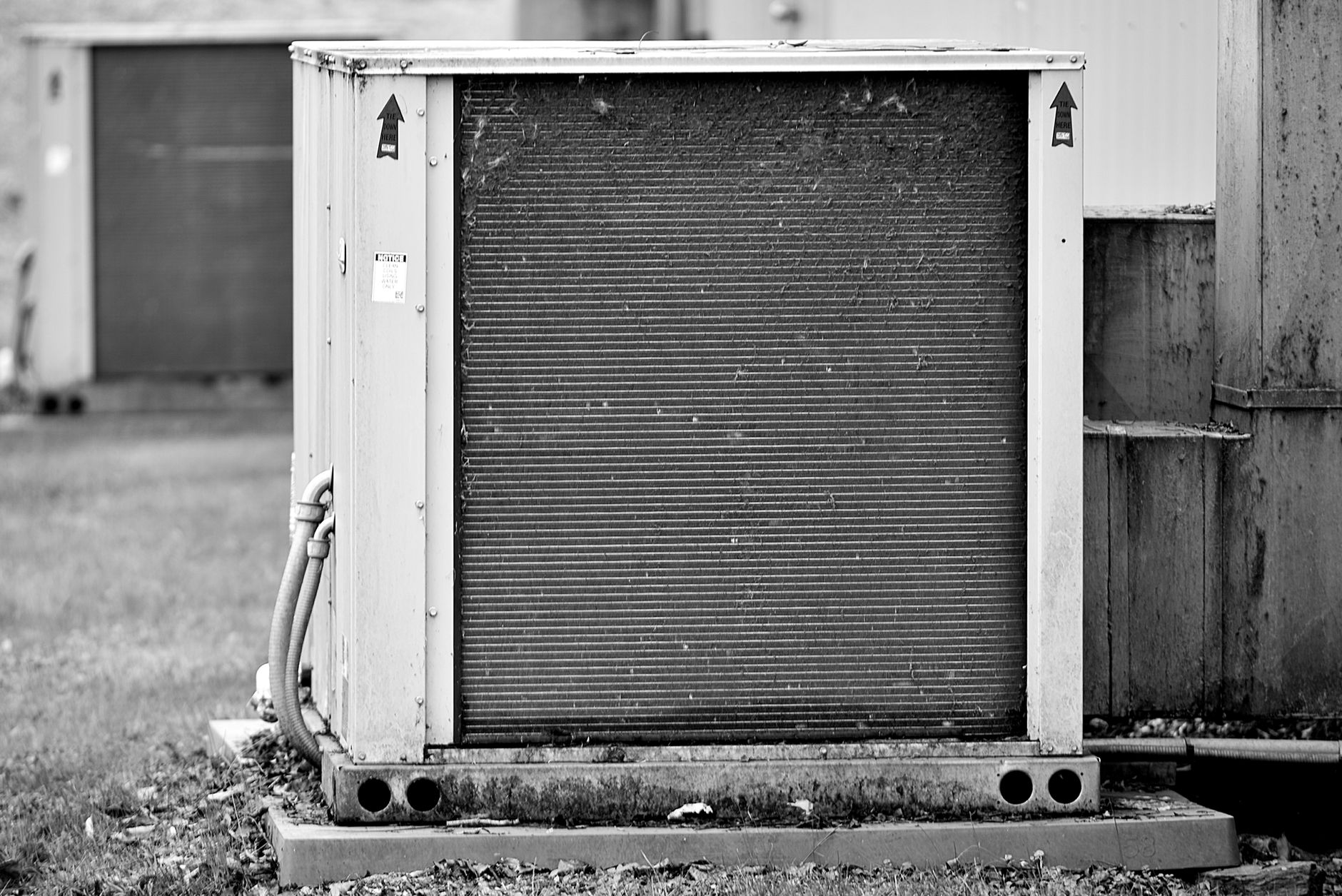
Commercial HVAC in London
London is the most cooling-led commercial market in the country. City of London and Canary Wharf office towers pack high occupancy, dense IT loads and large glazed south faces into deep floorplates, so they call for cooling almost every hour a building is open, and often through the winter on the interior zones. Add the Thames-side data-centre cluster, where the load is effectively flat 24 hours a day, and you have a market where chiller efficiency, VRF part-load performance and close-control reliability decide the energy bill far more than heating ever will.
That shape drives the work a good contractor does here. A typical London brief is not a like-for-like box swap. It is a staged refrigerant transition on a multi-let office, a free-cooling chiller upgrade on a plant deck that has run flat out for fifteen years, or a heat-recovery ventilation retrofit that lets a landlord cut the fresh-air energy penalty without touching the lettable floor. With an average commercial energy spend around £95,000 for a mid-sized single site, the numbers justify getting the design right the first time.
Two regulatory pressures sit on nearly every London job. The first is MEES: it is unlawful to continue letting commercial space below EPC E, and the Government has proposed EPC B by 2031 for privately rented buildings over 1,000 sqm (confirm the current milestones on gov.uk, as the interim 2027 EPC C step was dropped in the June 2026 interim response). The second is the GB F-gas phase-down, which is tightening the supply and price of high-GWP refrigerants like R410A. Together they turn ageing plant from a maintenance line into a lettability risk.
Installation and system design
A good contractor designs and installs commercial HVAC across London’s building types: multi-let and owner-occupied offices, hotels, retail units, care settings, and light-industrial units on estates like Park Royal, Brent Cross and the Old Kent Road industrial area.
Getting the design right for a London load
The single most important design insight in this niche is that a building spends most of its hours well below peak, so part-load efficiency and controls matter more than headline capacity. For a City office with a heavy internal gain, that usually points to heat-recovery (three-pipe) commercial VRF and VRV systems, which move heat from zones that need cooling to zones that need heat, rather than banks of single splits fighting each other.
Above roughly 150 to 200 kW of cooling, or where long pipe runs on a large Canary Wharf floorplate rule out direct expansion, a good contractor specifies commercial chillers with free-cooling and good turndown control. On the ventilation side, air handling units with EC fans and heat recovery are frequently a refurbish-rather-than-replace decision that cuts fan energy for a fraction of a full replacement.
F-Gas maintenance and planned PPM
Every commercial system holding fluorinated refrigerant carries statutory leak-check duties. At 5 tonnes CO2-equivalent of charge the check is at least annual; at 50 tonnes it is six-monthly; at 500 tonnes it is quarterly. In real terms roughly 2.4 kg of R410A crosses the 5-tonne line, so most London VRF systems and chillers are in scope.
Those checks must be carried out by an F-Gas registered company, with records kept, and the Environment Agency enforces the regime. Our HVAC maintenance and PPM contracts fold the statutory leak checks into planned visits, catch faults before they become breakdowns in a fully-let building, and keep the documentation manufacturers require to hold a warranty. For a City landlord juggling multiple tenants, planned maintenance is almost always cheaper than the reactive call-outs it prevents. Contracts are typically built around the SFG20 maintenance task schedules that the industry treats as the benchmark, so nothing statutory is missed.
Heat-pump electrification and MEES
The London Environment Strategy and the GLA’s 2030 net-zero target are pushing estates teams to look at electrifying heat. Our position is honest: a commercial heat pump only pays where the SCOP is good enough to close the gap between electricity and gas prices, which currently sit at roughly a 4:1 ratio (about 24 to 25p per kWh for electricity against 6 to 7p for gas on 2026 Ofgem caps; confirm current figures on gov.uk).
At a field SCOP around 3.5 a heat pump delivers useful heat at a cost roughly level with, to around 12% cheaper than, a good gas boiler. At the lower end of real-world SCOP it can be marginally more expensive. So a good contractor models it from your building’s actual half-hourly data rather than promising a saving. Where the maths works, electrifying heat also lifts the modelled EPC ahead of the proposed 2031 MEES standard, which is often the deciding argument for a landlord. A large new electrified load can also require a DNO supply upgrade, which is often the longest-lead item on a City project, so a good contractor checks supply capacity at feasibility and looks at phasing, demand management or pairing with solar and storage.
Where the running-cost savings actually live
The most valuable insight a good contractor brings to a London building is that the savings are rarely in the headline plant capacity. A City office or Canary Wharf tower spends most of its 8,760 annual hours well below peak load, so part-load efficiency and controls matter more than the rated output on the nameplate. Free-cooling on a chiller, which uses cool outside air whenever the London climate allows, EC (electronically commutated) fans that modulate rather than run flat out, and demand-controlled ventilation that supplies fresh air only where and when occupancy needs it, together tend to cut consumption more than an incremental step up in plant efficiency.
Ventilation is a good example. Every cubic metre of fresh air brought in for indoor air quality carries a heating or cooling cost, so on a densely-occupied London office the fresh-air load is significant. Mechanical ventilation with heat recovery can reclaim a large share of the heat in the exhaust air, and demand control trims the volume to real occupancy. That link between air quality and energy is the thread that runs through every project a good contractor designs.
Funding a London HVAC project
The £7,500 Boiler Upgrade Scheme covers only heat pumps up to 45 kWth in England and Wales, not VRF, chillers or air handling units, so a good contractor is clear about the routes that do apply. The Annual Investment Allowance and, for companies, the 50% first-year allowance for special-rate plant give relief on qualifying new plant — heating, ventilation and air-cooling plant is usually special-rate, so full expensing does not normally apply — which turns HVAC capital into meaningful tax relief. The Annual Investment Allowance covers any business, including unincorporated businesses. Climate Change Agreement relief reduces the Climate Change Levy on energy for eligible energy-intensive sectors, and the London Energy Efficiency Fund has historically financed public-sector buildings. A good contractor plans a project around the routes that genuinely apply rather than implying a grant that does not exist. Confirm all current figures and eligibility on gov.uk.
Why work with us in London
- Whole-life-cost advice, including the refurbish-versus-replace comparison on AHUs and chillers, rather than a default rip-out.
- Staged transitions that keep a fully-let City or Canary Wharf building occupied.
- Honest running-cost modelling on electrification, with no fabricated savings figures.
- Capital allowances awareness: qualifying new plant can attract a 100% first-year deduction under the Annual Investment Allowance, up to £1m a year (confirm current rules on gov.uk).
Areas around London
A good contractor covers Greater London across the E, EC, N, NW, SE, SW, W and WC postcode districts, and the surrounding commercial belt including Croydon, Bromley, Dartford, Watford and Slough. On the industrial side a good contractor regularly works across Park Royal, Brent Cross, Greenwich Peninsula, the Old Kent Road industrial area and Stratford. Beyond the capital, nearby commercial centres are covered in Reading, Luton, Oxford and Cambridge.
Guides on this topic
London commercial HVAC FAQs
My City office runs on R410A VRF. Do I have to replace it?
Not immediately. Existing larger R410A systems are not banned outright, but the F-gas phase-down is tightening supply and raising the price of the gas, so re-gassing a leaky system gets more expensive over time. The sensible plan is to keep it leak-tight and maintained, and specify R32 or R454B when you replace at end of life.
How does the proposed EPC B 2031 rule affect London landlords?
The Government has proposed that privately rented non-domestic buildings over 1,000 sqm reach EPC B by 2031, subject to secondary legislation. HVAC dominates a building’s modelled energy use, so efficient VRF or chillers, heat recovery and electrified heat are among the strongest levers to lift the rating. Confirm the current milestones on gov.uk, as the timetable is still being finalised.
Why is chiller efficiency such a big deal for London data suites?
A server room or data suite carries a near-constant cooling load every hour of the year, so even a small improvement in part-load chiller efficiency compounds across 8,760 hours. Free-cooling chillers, which use cool outside air when it is available, and good turndown control are usually where the biggest savings sit.
Can you work in occupied Canary Wharf and City buildings?
Yes. Most of our London office work is staged floor by floor or zone by zone, out of hours where needed, so tenants stay in place. That phasing is planned into the design and the programme from the start.
Is there a grant for commercial HVAC in London?
The £7,500 Boiler Upgrade Scheme covers only heat pumps up to 45 kWth in England and Wales, not VRF, chillers or air handling units. Commercial HVAC is funded through the Annual Investment Allowance, the 50% first-year allowance for special-rate plant and Climate Change Agreement levy relief where eligible. The London Energy Efficiency Fund has historically financed public buildings. Confirm current schemes on gov.uk before you budget.
Talk to us about your London building
If you run a City or Canary Wharf office, a hotel, a data suite or a light-industrial unit and your plant is ageing, leaking or failing a comfort brief, a good contractor can survey it and model the options. Ask us about commercial heating, cooling and ventilation design, maintenance and electrification across London and the surrounding commercial belt.
Postcodes covered in London
- E
- EC
- N
- NW
- SE
- SW
- W
- WC
Other areas covered
Get a quote in London
SEO Dons Ltd publishes this site and replies to every enquiry by email. It does not install, service or maintain HVAC.