Commercial HVAC in Leicester
Serving Leicester and the wider Leicestershire area, including Loughborough, Hinckley, Coalville.
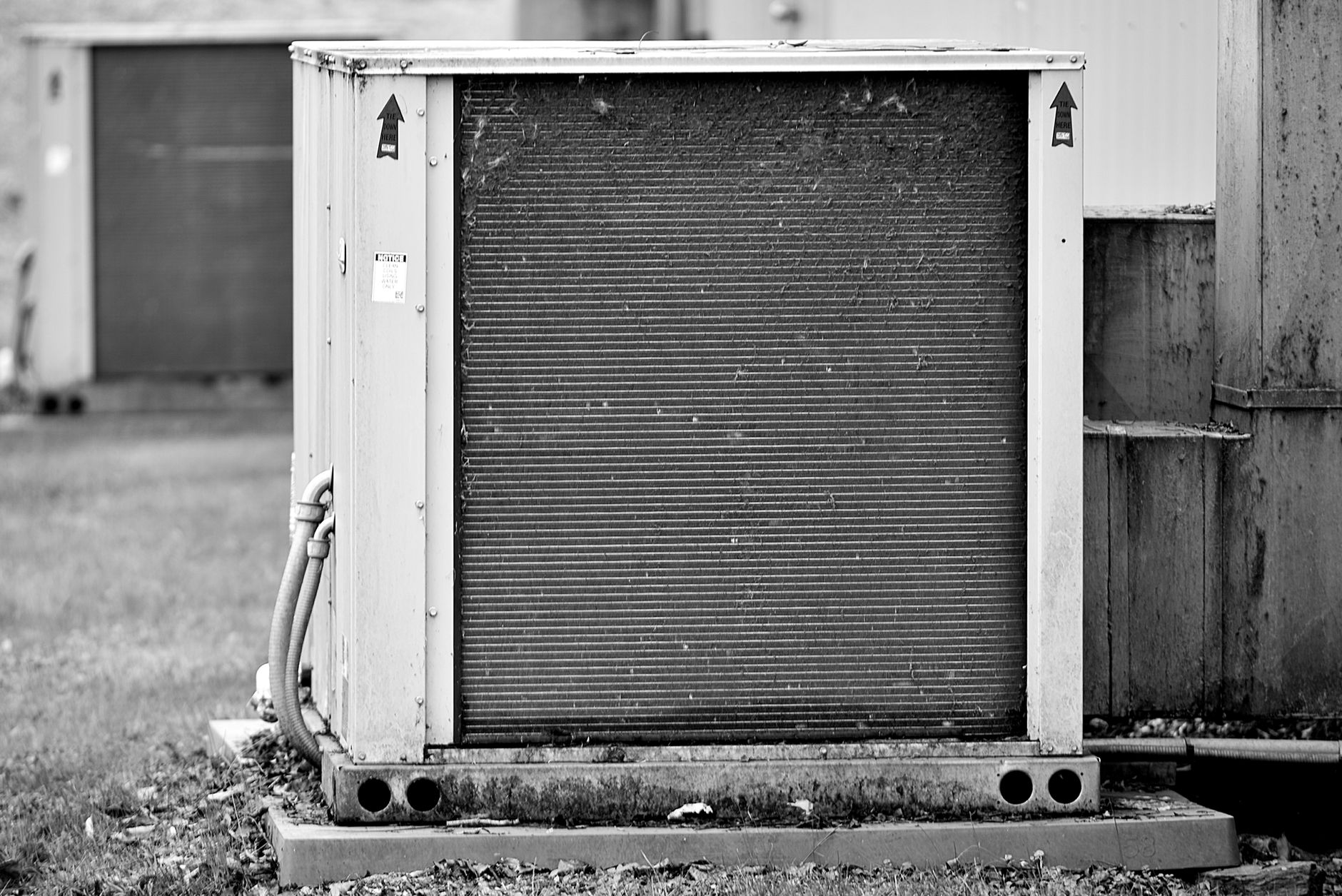
Leicester’s commercial building stock splits sharply between two worlds, and the HVAC brief changes depending on which side of the city you sit on. Around Frog Island and the older LE1 to LE4 fabric, the legacy is textile finishing, food production and light manufacturing — buildings that need reliable process cooling and ventilation heat management, not just comfort air conditioning. Out at Meridian Business Park, Optimus Point and Beaumont Leys, the story is large-footprint distribution sheds and multi-let office pavilions where warehouse air movement and floor-by-floor cooling dominate the plant budget. A good contractor designs, installs and maintains commercial HVAC across both, sized to how a Leicester building actually draws rather than to a catalogue headline.
Commercial HVAC installation and system design in Leicester
The single most important design decision on any Leicester project is matching the plant to the load shape, because a conditioned commercial building spends most of its operating hours well below peak. Part-load efficiency and controls, not headline capacity, are where the running cost is won or lost, and a building that is sized to the occasional design-day peak rather than the everyday load will sit oversized and inefficient for most of its life.
Offices, retail and mixed-use — VRF and heat recovery
For the office pavilions around Meridian Business Park and the city-centre professional stock in LE1, VRF and VRV systems are the workhorse — typically 22 to 150 kW of cooling, modulating refrigerant to many indoor units. Where a building has a sunny south face needing cooling while the north side calls for heat, three-pipe heat-recovery VRF moves heat between zones instead of rejecting it, which is exactly the efficiency prize a like-for-like box swap throws away. New systems here should be specified on low-GWP R32 (GWP 675) rather than legacy R410A (GWP around 2,088), so the plant is not stranded by the F-gas phase-down.
Manufacturing and process — chillers and cooling
Leicester’s food and textile-finishing heritage around Frog Island brings genuine process loads — chilled water for a production line runs a flat duty that comfort cooling never does. Above roughly 150 to 200 kW, or where long pipe runs rule out direct expansion, a chilled-water system with free-cooling and part-load turndown is the right answer, and any wet system carries ACOP L8 Legionella duties alongside the refrigerant law.
Warehousing — air handling and destratification
In the distribution units off the A46 and around Beaumont Leys, warm air stratifies to the roofline and leaves the working floor cold. Air handling units with EC fans and destratification, plus heat recovery on the fresh-air supply, cut fan energy hard — and an ageing AHU can often be refurbished with new fans, coils and recovery for a fraction of a full replacement.
F-Gas maintenance and planned preventative maintenance
Most commercial VRF and chiller systems in Leicester hold enough refrigerant to fall inside the F-gas leak-check regime. As a rule of thumb, around 2.4 kg of R410A crosses the 5-tonne CO2-equivalent line that triggers at-least-annual leak checks; 50 tonnes means six-monthly, 500 tonnes quarterly. Those checks must be carried out by an F-Gas registered company (certified through REFCOM, Quidos or Bureau Veritas) with records kept, and the Environment Agency enforces it.
A planned preventative maintenance contract built on SFG20 task schedules folds the statutory leak checks into scheduled visits, catches faults before they become breakdowns, and protects manufacturer warranties — most of which require documented PPM. For a Leicester food or textile site running process cooling, planned maintenance is uptime insurance as much as compliance, because a cooling failure on a production line is measured in lost output rather than an inconvenient afternoon.
Heat-pump electrification and MEES compliance
Leicester City Council targets net zero by 2030, and its Climate Action Plan and Sustainable Procurement Strategy both push commercial occupiers toward on-site efficiency. The commercial lever behind that is MEES: it is already unlawful to continue letting commercial space below EPC E, and the government has proposed EPC B by 2031 for privately rented non-domestic buildings over 1,000 sqm (confirm the current milestones on gov.uk, as the interim dates have moved).
Commercial heat pumps are the electrification step. With electricity at roughly four times the unit price of gas, a heat pump only pays where the SCOP is high enough to close that gap — at SCOP 3.5 a unit of useful heat lands roughly level to around 12% cheaper than a good gas boiler, but at the median field SCOP of 2.8 to 3.1 it can be marginally more expensive. A good contractor models it against your half-hourly data rather than promising a fixed saving. The £7,500 Boiler Upgrade Scheme covers only heat pumps up to 45 kWth in England and Wales, not VRF, chillers or air handling units; commercial HVAC is funded through the Annual Investment Allowance (100% on up to £1m a year) and, for companies, the 50% first-year allowance for special-rate assets — heating, ventilation and air-cooling plant is usually special-rate, so full expensing does not normally apply.
The refrigerant transition — what it means for Leicester plant
The reason refrigerant keeps coming up is that the law is moving underneath the plant. GWP 750-plus refrigerants were banned in new single-split systems under 3 kg from 1 January 2025, and the wider GB F-gas phase-down is steadily tightening the quota of high-GWP gas available — which is why R410A re-gas prices climb year on year. For a Leicester occupier the practical consequence is a stranding risk: a system that leaks and cannot be economically re-gassed becomes a forced, unplanned replacement at the worst possible time. The sensible response is not panic but planning — keep existing R410A plant leak-tight and maintained, and specify R32 (GWP 675) or R454B (around 466) whenever you replace, so the next system is not caught by the next tightening step. Where naturals such as R290 propane (GWP 3) make sense a good contractor handles the DSEAR siting that comes with them.
What commercial HVAC costs in Leicester — and the whole-life view
Cost is driven by load, the number of zones, plant-room access, the refrigerant, and any electrical supply upgrade — so a figure only means anything after a survey. For numbers, the cost ladder sets out sourced prices by system type, and anything larger than a split or a VRF scheme is priced from a design. The number that matters more than the headline, though, is whole-life cost — and this is where the refurbish-versus-replace question earns its keep on a Leicester food or textile site. An ageing AHU retrofitted with EC fans, new coils and heat recovery can restore performance and cut fan energy for a fraction of a full replacement’s capital and disruption, so a like-for-like rip-out is often the wrong default. A good proposal models the running cost from half-hourly data and sets out the capital, the capital-allowance treatment and the payback before you commit.
Why choose us for commercial HVAC in Leicester
A good contractor is a whole-building HVAC specialist, not a box-swapper. That means the sequence — make cooling and ventilation efficient first, electrify heat where the SCOP maths works, then power it with solar and tie it together with indoor air quality — drives every recommendation. The right contractor will be F-Gas registered, work to BS EN 378 and CIBSE Guide B, and give you the refurbish-versus-replace whole-life numbers rather than a default rip-out quote.
Areas around Leicester
A good contractor covers Leicester and the wider LE postcode area, including Beaumont Leys, Meridian Business Park, Optimus Point, Leicester Commercial Square and Frog Island, plus Loughborough, Hinckley, Coalville, Melton Mowbray and Market Harborough. A good contractor also works across the East Midlands into Nottingham, Derby, Coventry and Northampton.
Leicester commercial HVAC FAQs
My VRF runs on R410A — do I need to replace it now?
Not immediately. Existing larger R410A systems are not banned outright, but the F-gas phase-down is tightening supply and pushing up re-gas cost. Keep it leak-tight and maintained, plan replacement at end of life, and specify R32 or R454B when you do.
Do Meridian Business Park and Optimus Point units need process cooling or comfort cooling?
It depends on the tenant. Pure distribution sheds usually need destratification and ventilation rather than cooling, but any unit with production, IT rooms or chilled storage carries a genuine process load that a comfort system is not sized for. A good contractor surveys the actual duty first.
How does Leicester’s 2030 net-zero target affect my building?
The council target itself is not a legal duty on your building, but it sits alongside MEES, which is — EPC E to let now, with EPC B proposed by 2031 for larger rented buildings. Efficient HVAC is the fastest route to lift the rating.
Can you handle Legionella duties on our chilled-water plant?
Yes. Wet cooling systems carry ACOP L8 Legionella responsibilities, which a good contractor builds into the maintenance schedule alongside the F-gas leak checks and TR19 ductwork hygiene where relevant.
Is it cheaper to refurbish our warehouse AHU than replace it?
Often, yes. An EC-fan retrofit with new coils, heat recovery and filtration can cut fan energy for a fraction of a full replacement’s cost and disruption. A good contractor gives you the whole-life-cost comparison rather than defaulting to a rip-out.
Talk to us about your Leicester HVAC project
Whether it is a Frog Island process-cooling upgrade, a Meridian Business Park VRF refresh or a PPM contract across a mixed Leicester estate, a good contractor will survey the building, models the load and gives you a sequenced plan. Request a commercial HVAC survey and a good contractor will come back with the numbers.
Postcodes covered in Leicester
- LE1
- LE2
- LE3
- LE4
- LE5
- LE6
- LE7
- LE8
- LE9
- LE10
- LE17
- LE18
- LE19
Other areas covered
Get a quote in Leicester
SEO Dons Ltd publishes this site and replies to every enquiry by email. It does not install, service or maintain HVAC.