Commercial HVAC in Nottingham
Serving Nottingham and the wider Nottinghamshire area, including Beeston, West Bridgford, Arnold.
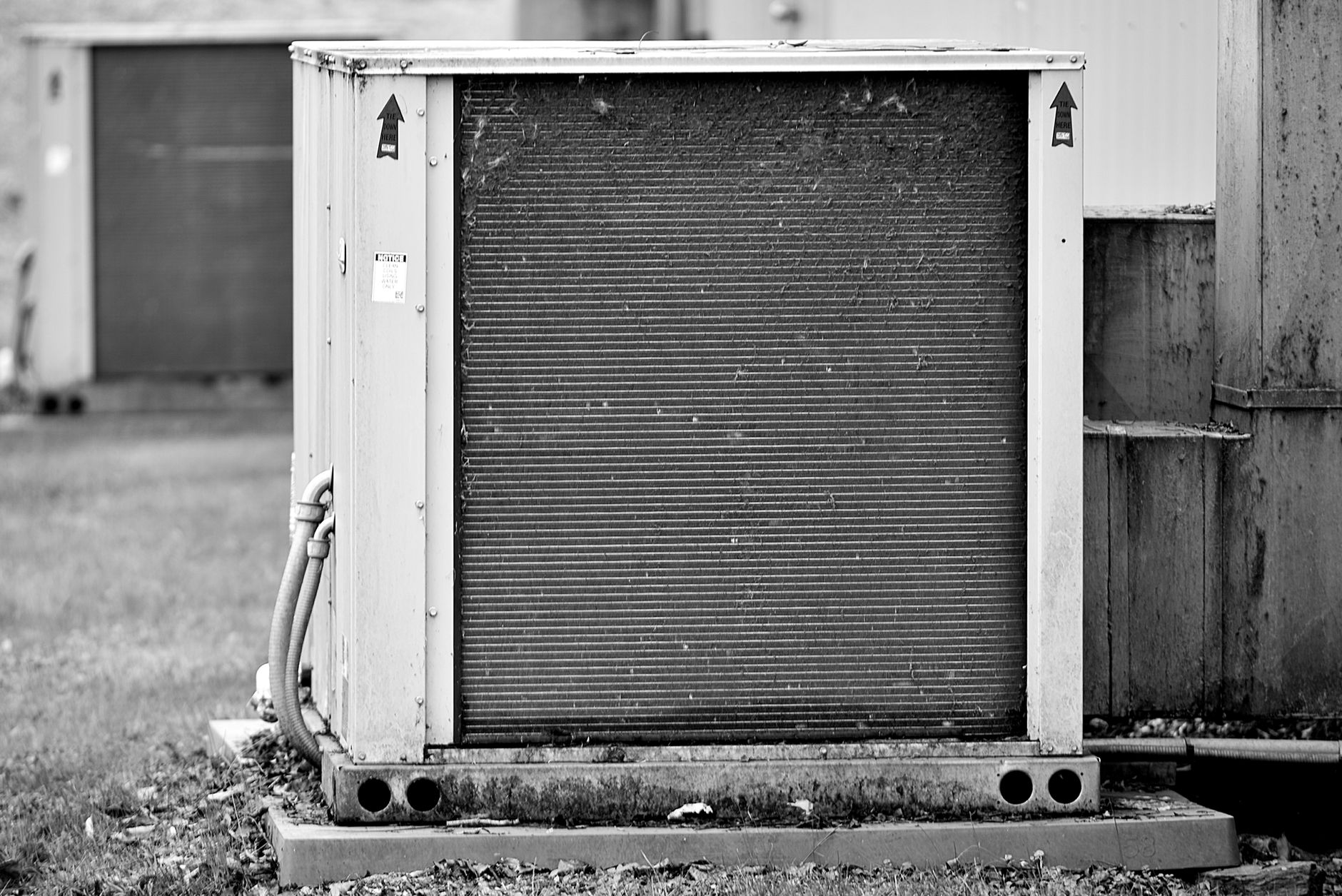
Nottingham carries the most aggressive city-level climate deadline in the UK — a 2028 carbon-neutral target, two years tighter than almost every other major city — and that shortens the runway for every commercial building owner in the NG postcode. The city’s HVAC profile is office-heavy: the Lace Market and city-centre professional stock is dense multi-let space where refrigerant transition and MEES compliance land at the same time, while the Boots Enterprise Zone and Castle Marina bring larger process and retail loads. A good contractor designs, installs and maintains commercial HVAC systems across Nottingham with that compressed timeline in mind, because plant specified now will still be running well past 2028.
Commercial HVAC installation and system design in Nottingham
A commercial building’s demand is occupancy- and gain-driven, not flat — cooling peaks with solar gain and IT heat, heating peaks on cold mornings, ventilation runs whenever the building is occupied. Sizing to that real profile, and controlling part-load well, matters far more than the headline plant rating, and it is where a genuine design differs from a catalogue swap.
Multi-let offices — VRF and refrigerant transition
The Lace Market and NG1 office fabric is exactly where the refrigerant clock is loudest. Much of this stock runs ageing R410A VRF, and a managing agent letting these floors faces the F-gas phase-down and the tightening MEES standard together. The right brief is usually a staged, floor-by-floor transition to heat-recovery R32 VRF that keeps the building let and occupied — not a single disruptive rip-out — with new controls and BMS integration to hold part-load efficiency.
Retail and larger loads — chillers
Around Castle Marina and the Boots Enterprise Zone, loads scale beyond what VRF comfortably covers. Above roughly 150 to 200 kW, or for any process or data-suite duty, a chilled-water system with free-cooling and part-load turndown is the efficient answer, with L8 water hygiene managed on any wet plant.
Ventilation and indoor air quality
Every m³ of fresh air brought in for indoor air quality carries a heating or cooling penalty unless it is recovered. Mechanical ventilation with heat recovery recovers up to around 90% of exhaust heat, and demand-controlled ventilation using CO2 and occupancy sensing supplies fresh air only when a Nottingham office is actually occupied — the link between healthy air and low energy that ties the whole strategy together.
F-Gas maintenance and planned preventative maintenance
If a Nottingham system holds F-gas — and most commercial VRF and chillers do — leak checks are a legal duty: at least annual at 5 tonnes CO2-equivalent, six-monthly at 50 tonnes, quarterly at 500. They must be done by an F-Gas registered company certified through REFCOM, Quidos or Bureau Veritas, with records retained, and the Environment Agency enforces it.
A PPM contract on SFG20 schedules folds those statutory checks into planned visits, protects warranties that require documented maintenance, and — for a multi-let Lace Market building with dozens of indoor units — keeps the whole estate compliant under one record rather than chasing reactive call-outs floor by floor. It is almost always cheaper than the emergency visits it prevents, and it gives a managing agent a documented compliance trail to hand a landlord or an incoming tenant.
Heat-pump electrification and MEES compliance
Nottingham’s 2028 neutrality target is the tightest in the country, so the electrification question arrives early here. Commercial heat pumps remove on-site combustion by running air- or water-source plant at SCOP 2.8 to 4.0, and they pay best against low flow temperatures, upgraded emitters and ventilation heat recovery. The honest fulcrum is the electricity-to-gas price ratio of roughly four to one: at SCOP 3.5 heat lands roughly level to around 12% cheaper than a good gas boiler, but at median field SCOP it can be marginally more — so a good contractor models it against your real consumption rather than quote a fixed figure.
On MEES, it is already unlawful to continue letting below EPC E, and EPC B by 2031 is proposed for larger rented non-domestic buildings (confirm current milestones on gov.uk). For the Lace Market’s landlords, efficient VRF, heat recovery and controls are the quickest route to lift a rating and protect lettability. The £7,500 Boiler Upgrade Scheme covers only heat pumps up to 45 kWth in England and Wales, not VRF, chillers or air handling units; the funding comes from the Annual Investment Allowance (100% on up to £1m a year) and, for companies, the 50% first-year allowance for special-rate assets — heating, ventilation and air-cooling plant is usually special-rate, so full expensing does not normally apply.
Why the compressed 2028 timeline changes the sequencing
Most cities give an occupier a decade or more to plan capital around a 2050 or 2040 target. Nottingham’s 2028 commitment compresses that, and it changes how a facilities manager should sequence work. A staged, floor-by-floor VRF transition that might comfortably run over five years elsewhere is better front-loaded here, and the efficiency measures that need no board-level electrification decision — EC-fan retrofits, heat recovery on ventilation, better BMS controls and demand-controlled ventilation — should come first because they lift the EPC and cut the bill without waiting on a heat-pump business case. The point is not to rip everything out at once; it is to order the work so the cheap, high-return efficiency gains land early and the capital-heavy electrification follows once the SCOP maths is proven on your building.
What commercial HVAC costs in Nottingham
Cost is driven by load, zone count, plant-room access, refrigerant choice and any electrical supply upgrade, so a survey precedes any figure. A sourced price ladder for each system type is on the cost guide; a figure for a specific building only comes from a survey and a load calculation. On a Lace Market multi-let a staged floor-by-floor VRF transition also spreads the capital across budget years, which is often as important to a managing agent as the headline total. A good proposal sets out the capital, the capital-allowance treatment and a modelled payback from half-hourly data before any commitment.
Why choose us for commercial HVAC in Nottingham
A good contractor works the whole building, not a single box. Efficiency first, then electrification where the SCOP maths works, then solar, then indoor air quality — that sequence is how facilities managers actually plan capital, and it is how a good contractor quotes. The right contractor will be F-Gas registered, design to BS EN 378, BS EN 14825 and CIBSE Guide B, and give you a staged plan that keeps Nottingham buildings let and running through the transition.
Areas around Nottingham
A good contractor covers Nottingham and the NG postcode area, including the Lace Market, Castle Marina, Boots Enterprise Zone, Blenheim Industrial Estate, Bulwell and Lenton, plus Beeston, West Bridgford, Arnold, Hucknall and Long Eaton. Neighbouring areas covered: Derby, Leicester, Sheffield and Doncaster.
Nottingham commercial HVAC FAQs
Does Nottingham’s 2028 net-zero target create a legal duty on my building?
The 2028 target is the council’s own city-wide commitment, not a direct legal duty on private buildings. The binding pressure is MEES — EPC E to let now, with EPC B proposed by 2031 for larger rented space — and efficient HVAC is the fastest way to comply.
Can you transition our Lace Market office VRF without emptying the building?
Yes. A staged, floor-by-floor R410A-to-R32 transition keeps tenants in place and revenue flowing while the refrigerant risk is removed one floor at a time. It is our default approach for occupied multi-let stock.
How often do we legally need F-gas leak checks?
At least annually once the charge reaches 5 tonnes CO2-equivalent, six-monthly at 50 tonnes and quarterly at 500. Most commercial VRF and chiller systems are in scope, and the checks must be done by an F-Gas registered company.
Will electrifying our heat push up running costs?
It depends on SCOP and tariff. Electricity is around four times the unit price of gas, so a heat pump only pays where the SCOP is good enough to close that gap. A good contractor models it from your half-hourly data before recommending it.
Is there a grant to help fund a commercial heat pump in Nottingham?
The £7,500 Boiler Upgrade Scheme covers only heat pumps up to 45 kWth in England and Wales, not VRF, chillers or air handling units. Commercial HVAC is funded through capital allowances — the Annual Investment Allowance and the first-year allowances — and the tax treatment of a given project should be confirmed with an accountant.
Talk to us about your Nottingham HVAC project
From a Lace Market VRF transition to a Castle Marina chiller upgrade or an estate-wide PPM contract, a good contractor will survey the building, model the load and set out a staged plan that fits Nottingham’s tight decarbonisation timeline. Request a commercial HVAC survey to get started.
Postcodes covered in Nottingham
- NG1
- NG2
- NG3
- NG4
- NG5
- NG6
- NG7
- NG8
- NG9
- NG10
- NG11
- NG14
- NG15
- NG16
Other areas covered
Get a quote in Nottingham
SEO Dons Ltd publishes this site and replies to every enquiry by email. It does not install, service or maintain HVAC.