Commercial HVAC in Doncaster
Serving Doncaster and the wider South Yorkshire area, including Mexborough, Bawtry, Thorne.
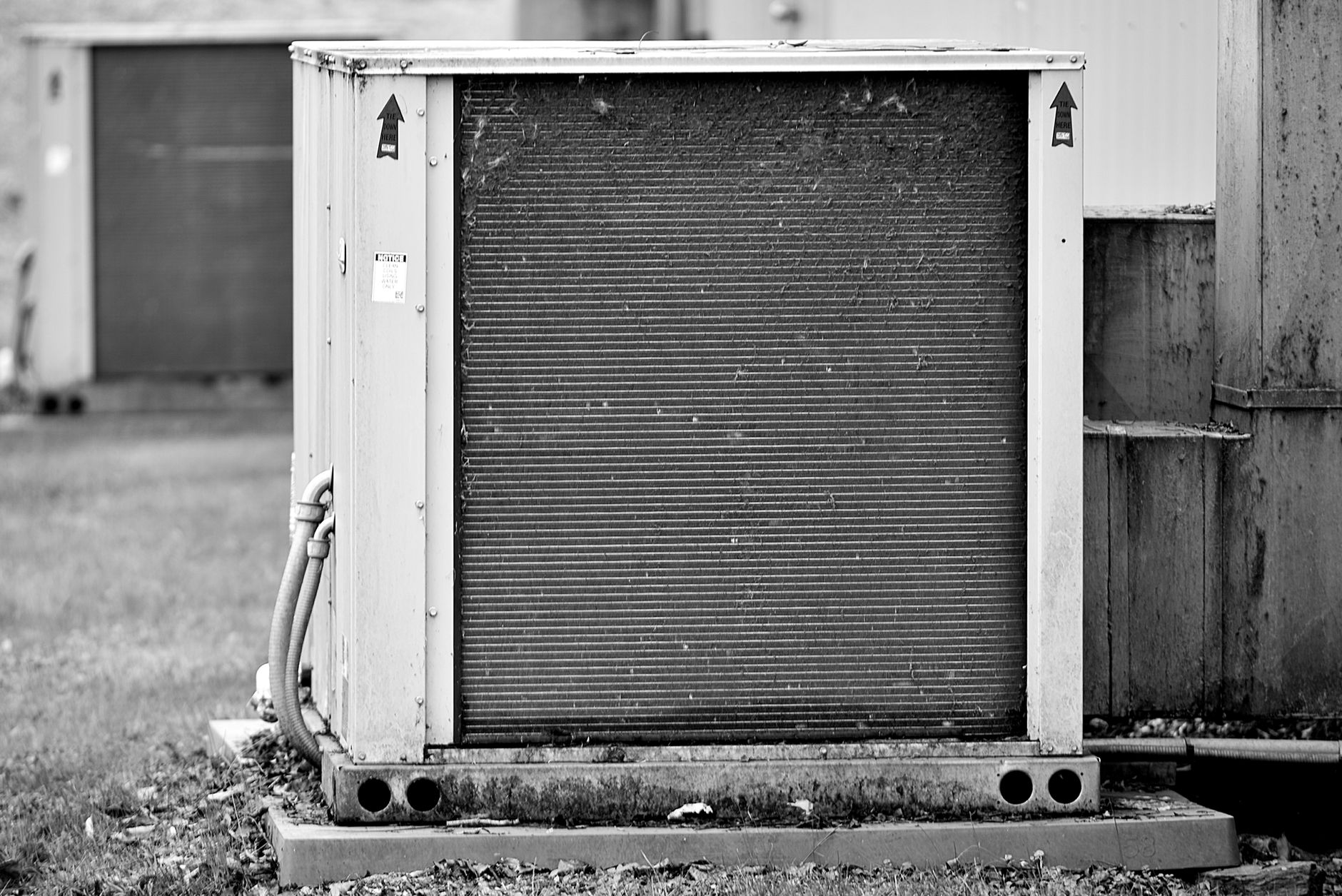
Doncaster sits on one of the UK’s largest inland logistics concentrations, and that shapes its HVAC brief more than any office market. iPort Doncaster and the DN7 Inland Port, feeding off the M18 and A1(M) corridor, are big-box distribution campuses where the plant challenge is moving and conditioning huge volumes of air — destratification, warehouse ventilation and office-pod cooling — rather than the multi-let VRF you find in a city centre. Alongside them, Wheatley Hall and the older DN estates carry mixed light-industrial and trade counter stock. A good contractor designs, installs and maintains commercial HVAC across all of it, sized to how a Doncaster logistics building actually draws.
Commercial HVAC installation and system design in Doncaster
The core design insight in a big shed is that warm air rises and strands at the roofline, leaving the working floor cold and the heaters fighting a battle they cannot win. Getting the air movement and the part-load controls right saves far more than chasing headline plant capacity, and on a warehouse the ratio of volume to occupancy makes that lesson even sharper than in an office.
Warehousing and logistics — AHUs and destratification
Across iPort and the DN7 units, air handling units with EC fans, destratification and heat recovery on the fresh-air supply are the flagship measure. Recirculating stratified warm air back down to the floor, and recovering heat from the exhaust rather than dumping it, cuts both the heating bill and the fan energy. An ageing AHU can frequently be refurbished — new EC fans, coils, recovery and F7 filtration — for a fraction of a full replacement’s cost, which is exactly the whole-life-cost decision a distribution operator should be offered rather than a default rip-out.
Office pods and gatehouses — VRF
The office pods, transport offices and welfare blocks inside these campuses run on VRF — 22 to 150 kW modulating to many indoor units. New systems should be specified on low-GWP R32 rather than legacy R410A so the plant is not stranded by the F-gas phase-down, with heat-recovery VRF wherever a building has simultaneous heating and cooling zones.
Chilled storage and process cooling
Where a Doncaster unit handles temperature-controlled distribution or food logistics, a chilled-water system carries the flat process duty that comfort cooling cannot, with free-cooling and part-load turndown and L8 hygiene on any wet plant.
F-Gas maintenance and planned preventative maintenance
Refrigerant law reaches into every warehouse office pod and chilled store that holds F-gas. Leak checks are a legal duty — at least annual at 5 tonnes CO2-equivalent, six-monthly at 50 tonnes, quarterly at 500 — carried out by an F-Gas registered company certified through REFCOM, Quidos or Bureau Veritas, with records kept and the Environment Agency enforcing.
For a multi-tenant logistics park, a single PPM contract on SFG20 schedules is the clean way to hold dozens of split systems, roof-mounted condensers and AHUs compliant under one record. It catches faults before they close a loading bay, protects warranties, and is almost always cheaper than the reactive call-outs it prevents — and on a 24/7 logistics operation, uptime is the whole point.
Heat-pump electrification and MEES compliance
Doncaster Council targets net zero by 2040, and the iPort rooftops are among the largest solar and electrification opportunities in the region. Commercial heat pumps take out on-site gas by running at SCOP 2.8 to 4.0, and a big warehouse pairs them naturally with warm-air distribution and destratification. The economics turn on the electricity-to-gas ratio of roughly four to one: at SCOP 3.5 heat lands roughly level to around 12% cheaper than a good gas boiler, but at median field SCOP it can cost marginally more, so a good contractor models each site rather than promise a saving.
On MEES, it is already unlawful to continue letting commercial space below EPC E, and EPC B by 2031 is proposed for larger rented non-domestic buildings (confirm current milestones on gov.uk). The £7,500 Boiler Upgrade Scheme covers only heat pumps up to 45 kWth in England and Wales, not VRF, chillers or air handling units — funding runs through the Annual Investment Allowance (100% on up to £1m a year) and, for companies, the 50% first-year allowance for special-rate assets — heating, ventilation and air-cooling plant is usually special-rate, so full expensing does not normally apply, and a large electrified plant may need a DNO supply check as the longest-lead item.
The rooftop opportunity — HVAC, solar and the electrification chain
A Doncaster big box has something a city-centre office rarely does: acres of flat, unshaded roof directly above the plant that draws the power. That is what makes the iPort and DN7 estates such a natural fit for the full electrification chain — make the air handling and cooling efficient first, electrify the heat with a warehouse heat pump where the SCOP maths works, then power that electrified plant with rooftop solar so the daytime cooling and fan load runs on generation rather than the grid. The sequence matters because solar only pays back against a load that is actually there in daylight, and a conditioned warehouse’s fan and cooling demand is exactly that daytime, occupancy-driven load. A good contractor sizes the HVAC to the real profile first so the solar that follows is matched to a demand that has already been made as small and efficient as possible.
What commercial HVAC costs in Doncaster
Cost is driven by the conditioned volume, the air-movement strategy, plant access and any electrical supply upgrade, so a survey precedes any figure. A sourced price ladder for each system type is on the cost guide; a figure for a specific building only comes from a survey and a load calculation. On a warehouse the refurbish-versus-replace call on an ageing AHU is often the single biggest cost lever — an EC-fan and heat-recovery retrofit can restore performance for a fraction of a replacement. A good contractor models the running cost from your half-hourly data and sets out the capital, the capital-allowance treatment and the payback before you commit. The guide to what an AHU costs covers published unit prices and when refurbishment beats replacement.
Why choose us for commercial HVAC in Doncaster
Logistics HVAC is its own discipline, and a good contractor treats it that way — air movement, destratification and 24/7 uptime, not just comfort cooling. The right contractor will be F-Gas registered, design to BS EN 378 and CIBSE Guide B, give you the refurbish-versus-replace numbers on ageing AHUs, and be able to hold a whole distribution park under one compliant maintenance record.
Areas around Doncaster
A good contractor covers Doncaster and the DN postcode area, including iPort Doncaster, the DN7 Inland Port, Wheatley Hall, Goldthorpe and Carcroft, plus Mexborough, Bawtry, Thorne, Conisbrough and Tickhill. Neighbouring areas covered: Sheffield, Leeds, Hull and Nottingham.
Doncaster commercial HVAC FAQs
Why is my warehouse cold at floor level when the heaters are running?
Warm air stratifies and collects at the roofline, so the heaters work hard while the floor stays cold. Destratification recirculates that warm air down to where people work, usually cutting the heating bill at the same time.
Should we refurbish or replace the AHUs on our iPort unit?
Often refurbish. An EC-fan retrofit with new coils, heat recovery and filtration can restore performance and cut fan energy for far less than a full replacement. A good contractor gives you the whole-life-cost comparison before you decide.
Can one maintenance contract cover a whole multi-tenant logistics park?
Yes. A single PPM contract on SFG20 schedules holds all the split systems, condensers and AHUs across a park under one compliant record, including the statutory F-gas leak checks.
Does Doncaster’s 2040 net-zero target affect our lease obligations?
The 2040 target is the council’s own commitment, not a direct legal duty on your unit. MEES is the binding standard — EPC E to let now, EPC B proposed by 2031 for larger rented buildings — and efficient HVAC lifts the rating.
Could a big electrified plant overload our site’s electricity supply?
Possibly. Electrified heating and cooling add load, and a DNO supply upgrade can be the longest-lead item. A good contractor checks capacity at feasibility and looks at phasing, demand management, or pairing with solar and storage.
Talk to us about your Doncaster HVAC project
Whether it is destratification across an iPort shed, a warehouse AHU refurbishment or a park-wide PPM contract, a good plan is built around 24/7 uptime.
Postcodes covered in Doncaster
- DN1
- DN2
- DN3
- DN4
- DN5
- DN6
- DN7
- DN8
- DN9
- DN10
- DN11
- DN12
Other areas covered
Get a quote in Doncaster
SEO Dons Ltd publishes this site and replies to every enquiry by email. It does not install, service or maintain HVAC.