Commercial HVAC in Oxford
Serving Oxford and the wider Oxfordshire area, including Abingdon, Witney, Bicester.
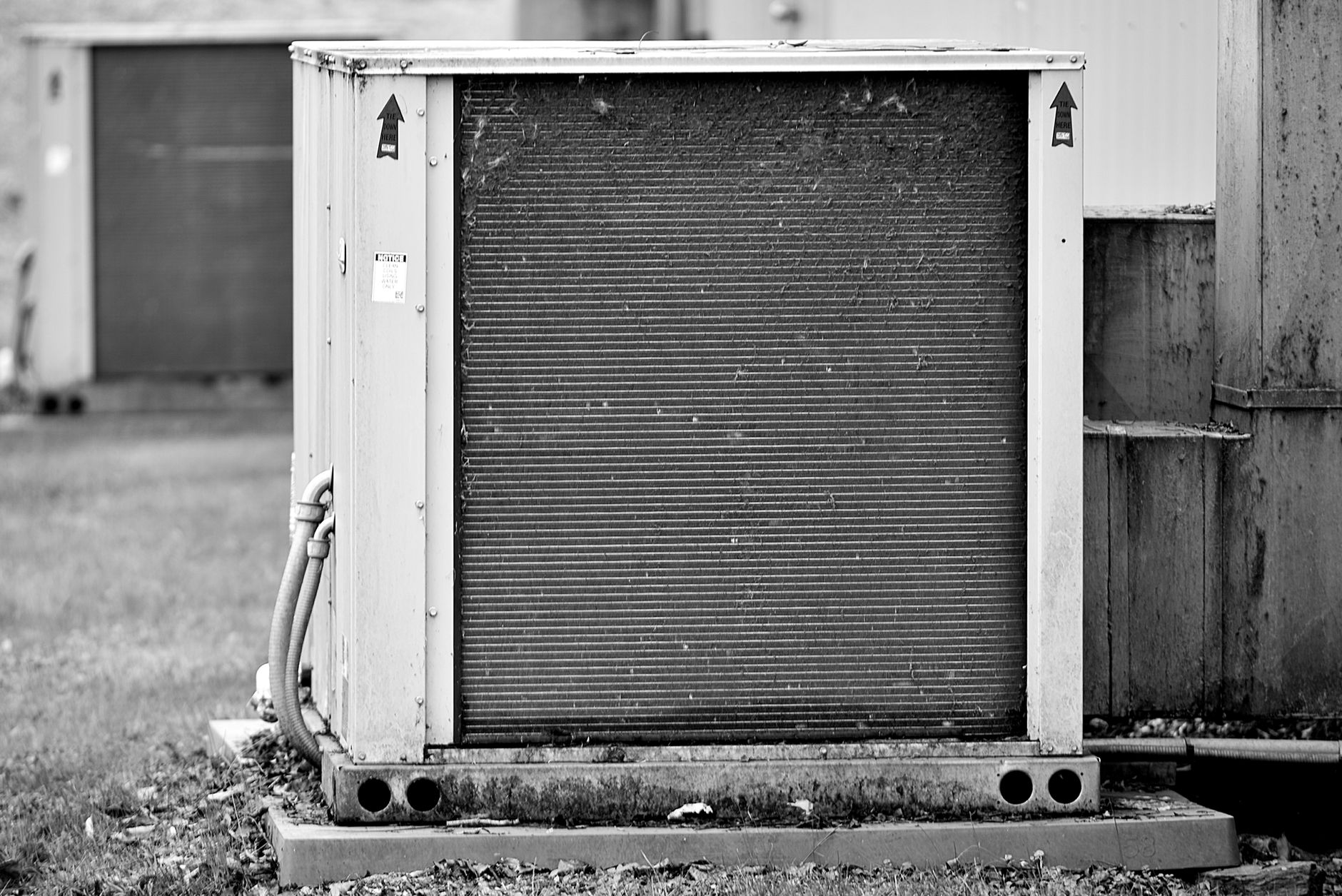
Oxford is a research city, and its commercial HVAC brief is defined by the laboratory. Oxford Science Park, Harwell Campus, Milton Park and Begbroke host a dense cluster of R&D facilities, clean rooms and lab suites where temperature and humidity have to stay inside tight tolerances around the clock — and where a control failure can ruin an experiment or a sample store worth far more than the plant itself. That makes precision cooling, close control and reliable ventilation the core requirement, not comfort cooling. Alongside it sits the historic college and university estate, where conservation constraints shape every plant decision. A good contractor designs, installs and maintains commercial HVAC across both, starting from the environment each building has to hold.
Commercial HVAC installation and system design in Oxford
A lab or clean room is a controlled-environment problem, not a comfort one. It carries internal heat gains from research equipment, needs precise temperature and humidity, and often runs a flat load around the clock — which pushes the design toward chilled water, close control and redundancy rather than modulating comfort VRF.
Lab cooling, chillers and conservation-sensitive installs
For a lab or clean room, a chilled-water system with close control, good part-load turndown and N+1 redundancy on the critical load is the right approach, because the priority is holding the environment without interruption. Sample stores and equipment rooms often need their own dedicated close-control cooling. For the office and support-space stock across the science parks, heat-recovery VRF air conditioning on low-GWP R32 or R454B handles the comfort load, moving heat between zones. Air handling units with EC fans, heat recovery and high-grade filtration handle the fresh-air and containment requirements a lab often carries. On the historic college estate the challenge shifts to plant siting and acoustics — discreet external condensers, careful routing and BS 4142 acoustic assessment to keep external plant noise within limits in a conservation setting — where a sensitive, low-visual-impact design matters as much as capacity.
What commercial HVAC costs on an Oxford research site
Cost is driven by the tolerance the environment must hold, the redundancy required, plant access, refrigerant and any electrical upgrade — and on the historic estate, by conservation-sensitive siting and acoustic treatment. Published budget figures sit on the HVAC cost ladder: about £400–£700 per kW installed for VRF in one 2026 trade guide, with chillers and air handling units priced from a design. The value of monitored PPM on a research site rarely shows in the plant price — it shows in the experiment or sample store it protects. A good contractor models it from a survey before quoting.
F-Gas maintenance and planned preventative maintenance
The chillers and close-control units serving Oxford’s lab estate across the OX commercial districts frequently carry substantial refrigerant charges, putting them firmly into statutory F-gas leak-check scope. Around 2.4 kg of R410A crosses the 5-tonne CO2-equivalent threshold for at least annual checks; a larger chiller can reach the 50-tonne six-monthly or 500-tonne quarterly level. An F-Gas registered company must carry out the checks and keep the records, and the Environment Agency enforces the duty.
In a research setting, a cooling failure that breaches a controlled environment can be catastrophic, so a planned preventative maintenance contract with remote monitoring is a risk-management measure first and a compliance one second. It catches drift and faults before they breach tolerance, handles the statutory checks, and protects warranties that require documented maintenance. Our HVAC maintenance and PPM schedules follow SFG20 task frequencies and are tuned to the criticality of the environment being held.
Heat-pump electrification and MEES compliance
Oxford City Council carries a 2040 net-zero target, and the research institutions and corporate occupiers across the science parks bring their own decarbonisation commitments. For owners and landlords, MEES is the immediate legal driver: it is already unlawful to continue letting commercial space below EPC E, and the proposed EPC B standard by 2031 for buildings over 1,000 sqm would bring much of the science-park office stock into scope. Because HVAC dominates modelled energy use, efficient chillers, VRF, heat recovery and controls are the most direct route to the rating.
Whether a commercial heat pump cuts running cost depends on SCOP and tariff. Electricity is around four times the unit price of gas on 2026 caps, so electrification pays where seasonal efficiency closes that gap — roughly level to modestly cheaper at a SCOP near 3.5, potentially marginally more at lower field SCOPs. A good contractor models it from your real data. A high-baseload lab estate that also has a heating demand is often well placed to recover heat from its cooling load, and commercial heat pumps with heat recovery can fit that picture efficiently.
Why Oxford businesses work with us
A good contractor designs controlled environments, not just comfort systems. For a lab or clean room that means holding tight temperature and humidity tolerances with redundancy and monitoring; for the historic estate it means discreet, acoustically sensitive plant that respects a conservation setting. A refurbishment can beat a replacement, a quote should come from a survey rather than a phone estimate, and the contractor's engineers must be F-Gas registered with the records the Environment Agency requires.
A good contractor sequences capital the way an estates lead plans it: efficiency and heat recovery first, electrification where the SCOP maths works, then solar to offset the high baseload. No urgency selling, no invented savings.
Research buildings do not tolerate improvised access, so on the Oxford science parks a good contractor plans works around the facility’s operating constraints from the survey onward — containment requirements in a lab, out-of-hours windows where an experiment cannot be interrupted, and the documentation a regulated environment expects. On the college and university estate a good contractor coordinates with conservation and estates teams so external plant is sited and specified to satisfy both the building’s setting and the acoustic limits, keeping the visual and noise impact within what a listed context allows.
Areas around Oxford
A good contractor covers Oxford and the full OX postcode area, including the OX1 to OX4 commercial districts, out to Abingdon, Witney, Bicester, Didcot and Kidlington. On the science-park side that means Oxford Science Park, Begbroke Science Park, Harwell Campus, Milton Park and the Culham Innovation Centre. The wider region is covered too — see our pages for Reading, Swindon and Milton Keynes, plus London and Cambridge.
Common questions about commercial HVAC in Oxford
Do you design cooling for labs and clean rooms?
Yes — it is a core part of our Oxford work. Labs, clean rooms and sample stores need temperature and humidity held inside tight tolerances around the clock, with close control, redundancy and monitoring. A good contractor designs these as controlled environments, sized from the research load and the tolerance that has to be maintained, not as comfort systems.
Can you install HVAC on a listed or conservation-constrained building?
Yes. On Oxford’s historic college and university estate the challenge is plant siting, acoustics and visual impact as much as capacity — discreet external condensers, careful routing, and BS 4142 acoustic assessment to keep external plant noise within limits. A good contractor designs for a low-visual-impact, conservation-sensitive installation.
How often do I need F-gas leak checks on lab chillers?
It depends on the charge: at least annual at 5 tonnes CO2-equivalent, six-monthly at 50 tonnes, quarterly at 500 tonnes. A larger lab chiller can reach the six-monthly or quarterly level. An F-Gas registered company must carry out the checks and keep the records, and the Environment Agency enforces the duty.
Will a heat pump work for a high-baseload research building?
It can, particularly where the building has both a cooling load to reclaim heat from and a heating demand to serve. Whether it cuts running cost depends on SCOP and tariff — a good contractor models it from your data. A high, steady baseload can suit a well-designed heat-recovery system, but it must never compromise the controlled environment.
Is there a grant for commercial HVAC or heat pumps in Oxford?
The £7,500 Boiler Upgrade Scheme covers only heat pumps up to 45 kWth in England and Wales, not VRF, chillers or air handling units. Commercial HVAC is funded through the Annual Investment Allowance (100% on up to £1m a year) and, for companies, the 50% first-year allowance for special-rate assets — heating, ventilation and air-cooling plant is usually special-rate, so full expensing does not normally apply, with Climate Change Agreement relief on the levy for eligible energy-intensive sectors. Confirm current rates on gov.uk.
Get a quote for commercial HVAC in Oxford
From a lab cooling upgrade at Oxford Science Park or Harwell to a conservation-sensitive install on the college estate, a good contractor quotes from a survey and your real load data. Ask for a desk feasibility or explore our commercial HVAC services across Oxfordshire. A good contractor will tell you honestly when a refurbishment beats a replacement — and never quote a saving it cannot model.
Postcodes covered in Oxford
- OX1
- OX2
- OX3
- OX4
Other areas covered
Get a quote in Oxford
SEO Dons Ltd publishes this site and replies to every enquiry by email. It does not install, service or maintain HVAC.